Everything happening under the hull
Lombok sits inside the Coral Triangle, the most biodiverse marine region on Earth. Sekotong Bay is shallow, sheltered and full of it — which is why we carry masks on every trip and stop whenever someone shouts.
Why the fish here are so good
The Coral Triangle spans Indonesia, Malaysia, the Philippines, Papua New Guinea, Timor-Leste and the Solomon Islands. It holds around three-quarters of the world's known coral species and well over two thousand reef fish species.
Sekotong adds two local advantages. The bay is shallow and protected, so you can see everything from the surface without a tank. And it is far enough off the tourist track that the reefs get a fraction of the traffic of the northern Gilis.
The reef regulars
Fifteen minutes over the coral between Gili Sudak and Gili Nanggu will get you most of this list.
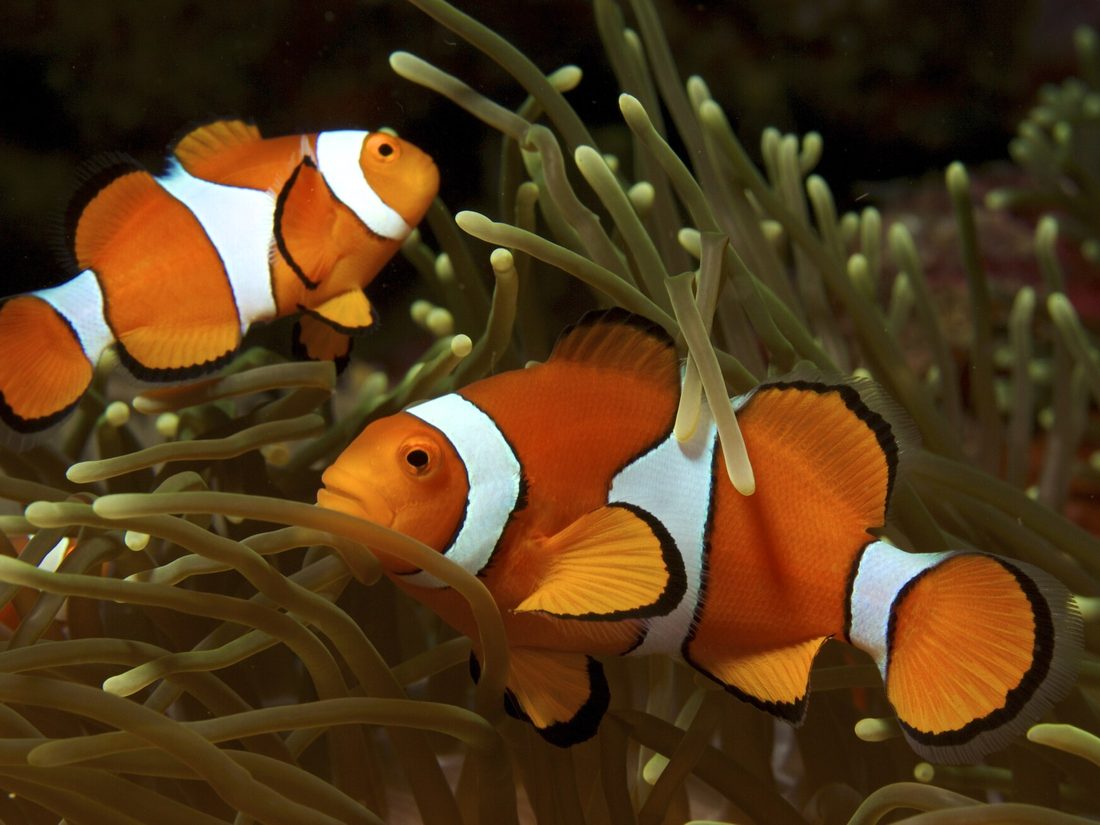
Photo: Nick Hobgood / CC BY-SA 3.0
Clownfish
Amphiprion spp.Orange-and-white, living in a sea anemone that would sting anything else, protected by a mucus coat. Fiercely territorial — a five-centimetre fish will charge a snorkeller's mask. Every group's favourite.
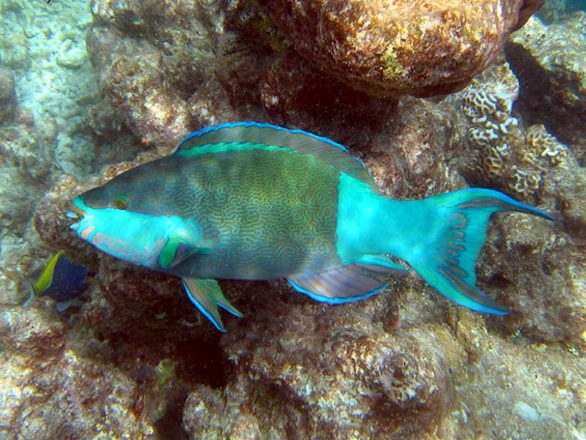
Photo: Ewa Barska / CC BY-SA 3.0
Parrotfish
ScaridaeBlue, green and pink, with a fused beak for scraping algae off coral. The crunching you can hear underwater is them eating. They excrete the ground-up coral as sand — a good part of the beach you launched from came out of a parrotfish.
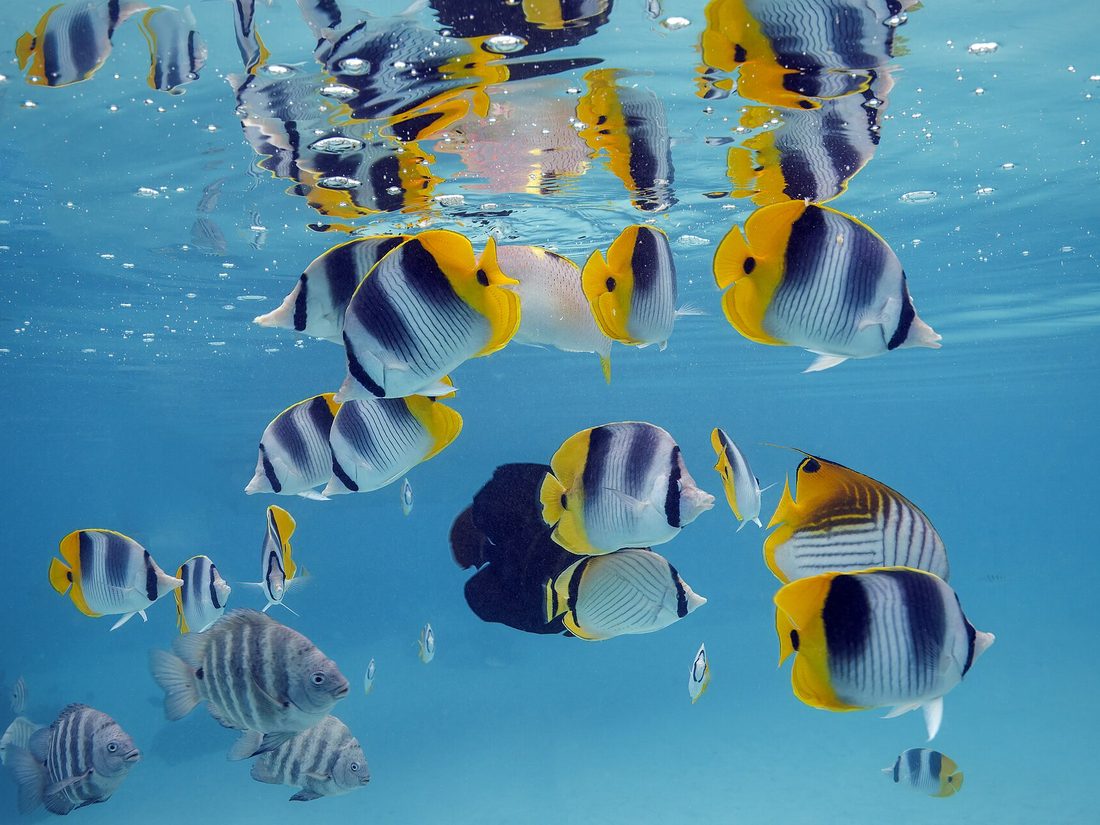
Photo: Charles J. Sharp / CC BY-SA 4.0
Butterflyfish
ChaetodontidaeFlat, disc-shaped, boldly patterned and usually paired for life. Many have a false eyespot near the tail to confuse predators about which end will bolt.
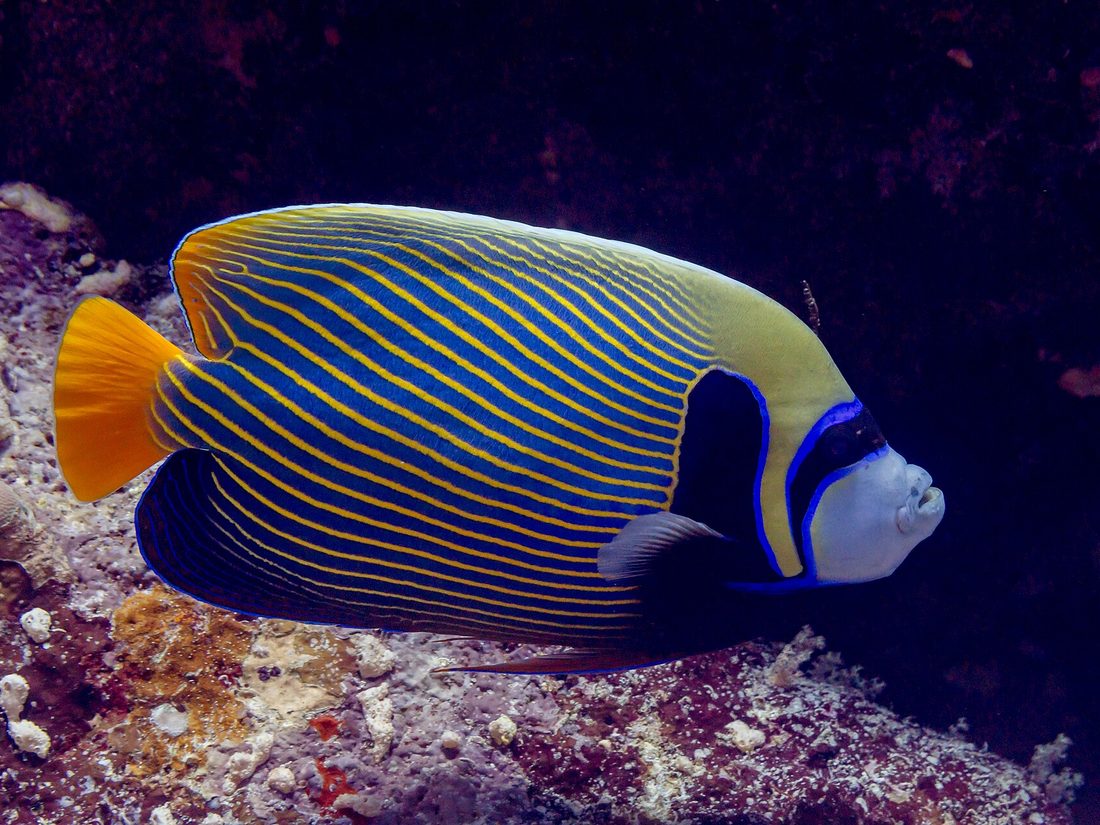
Emperor angelfish. Photo: Diego Delso / CC BY-SA 4.0
Angelfish
PomacanthidaeBigger and even more extravagantly marked than butterflyfish. Emperor and regal angelfish are the showstoppers, and juveniles look nothing like the adults — concentric blue and white rings.
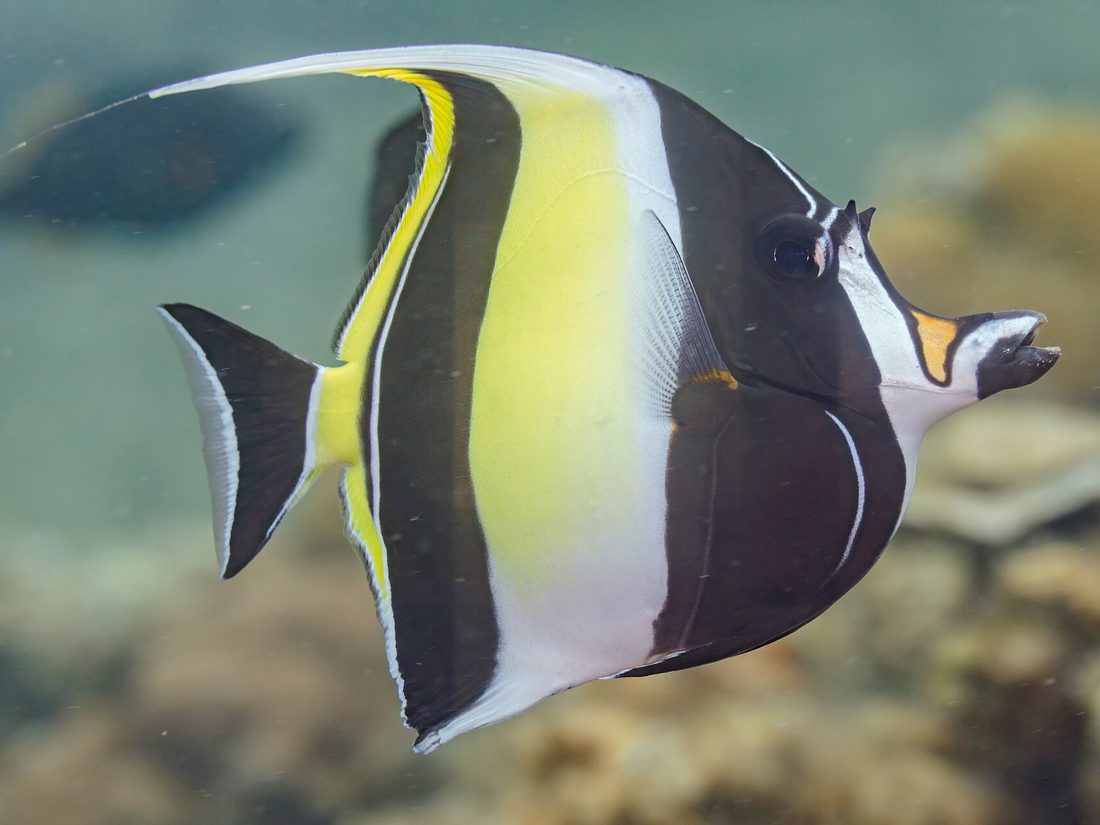
Photo: Diego Delso / CC BY-SA 4.0
Moorish idol
Zanclus cornutusBlack, white and yellow bands with a long trailing dorsal filament. The single most elegant fish on the reef, and one of the few that looks exactly like the cartoon of itself.
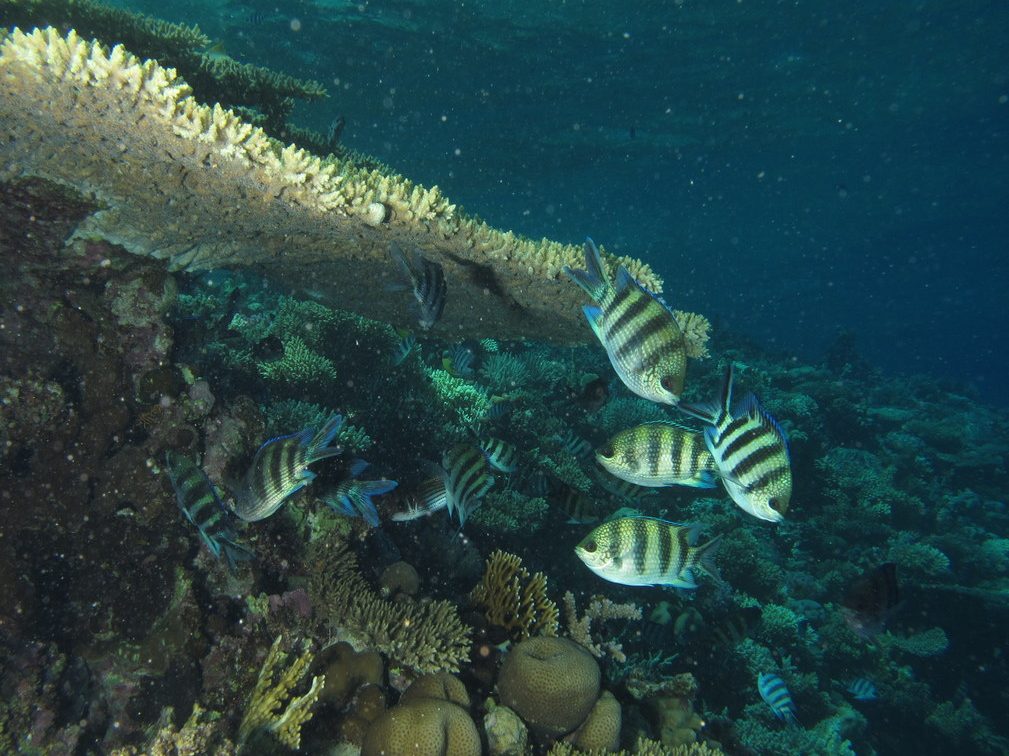
Photo: Derek Keats / CC BY 2.0
Sergeant major & damsels
PomacentridaeThe busy, chattering crowd over every coral head. Small, endlessly territorial, and the fish most likely to mob you if you stop moving.
Humphead wrasse. Photo: Julien Bidet / CC BY-SA 4.0
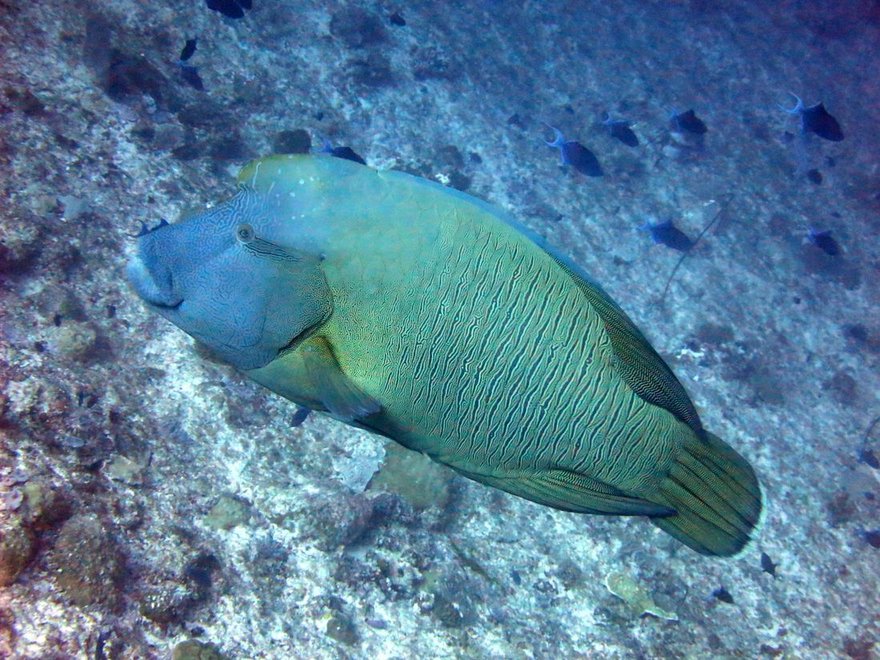
Wrasse
LabridaeFrom tiny cleaner wrasse running “cleaning stations” that bigger fish queue at, up to the humphead or Napoleon wrasse — a two-metre, endangered giant. Many wrasse change sex as they mature.
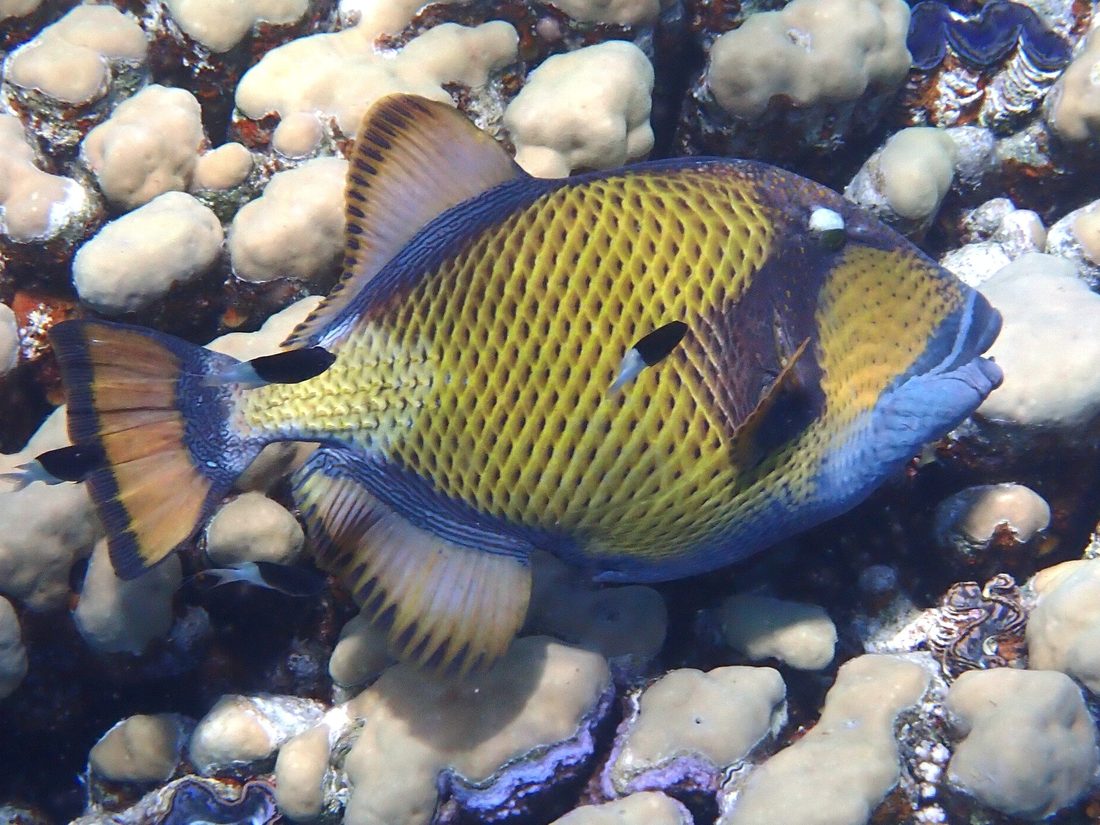
Photo: Wikimedia Commons / CC BY 4.0
Triggerfish
BalistidaeChunky, armour-plated and intelligent-looking. The titan triggerfish defends a cone-shaped nesting territory in season and will genuinely chase intruders — swim horizontally out of the cone, not upward.
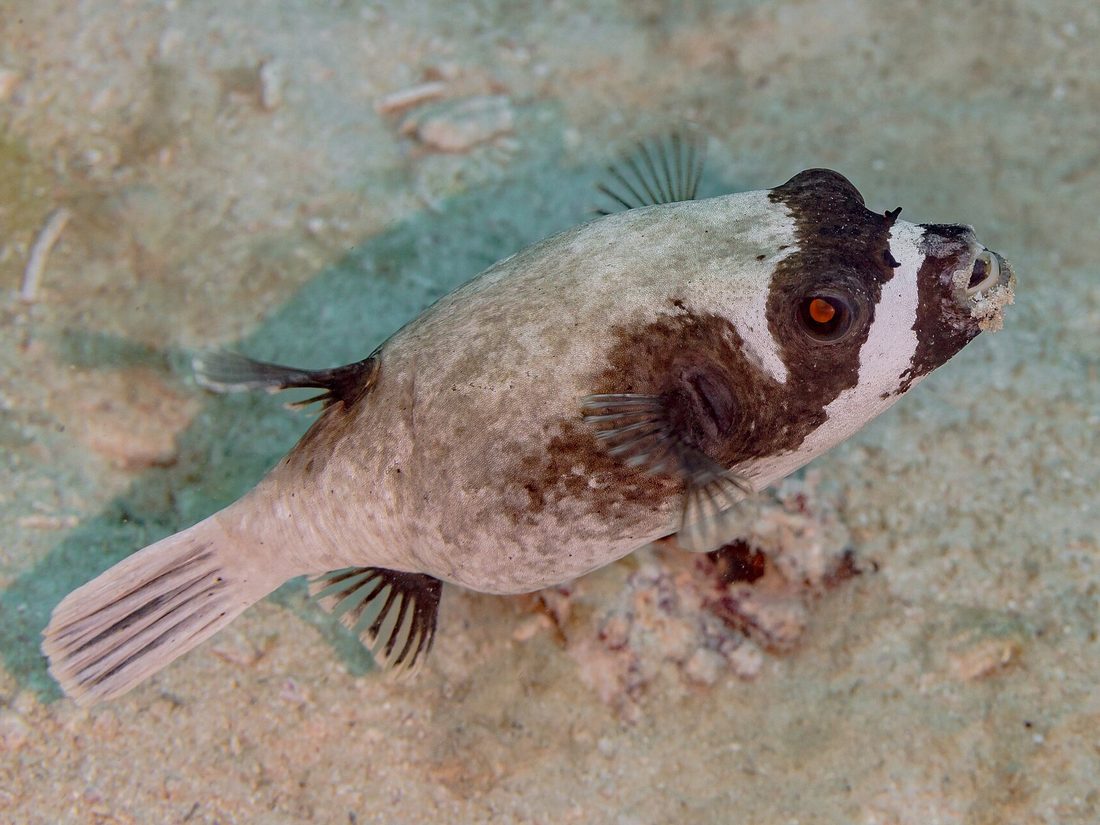
Photo: Diego Delso / CC BY-SA 4.0
Pufferfish & boxfish
Tetraodontidae, OstraciidaeSlow, comical and toxic — the reason pufferfish is a licensed dish in Japan. Never provoke one into inflating; it is a stress response, not a party trick.
The hidden ones
Half the reef is pretending to be something else. Slow down, stop kicking, and hover over one square metre for two minutes.
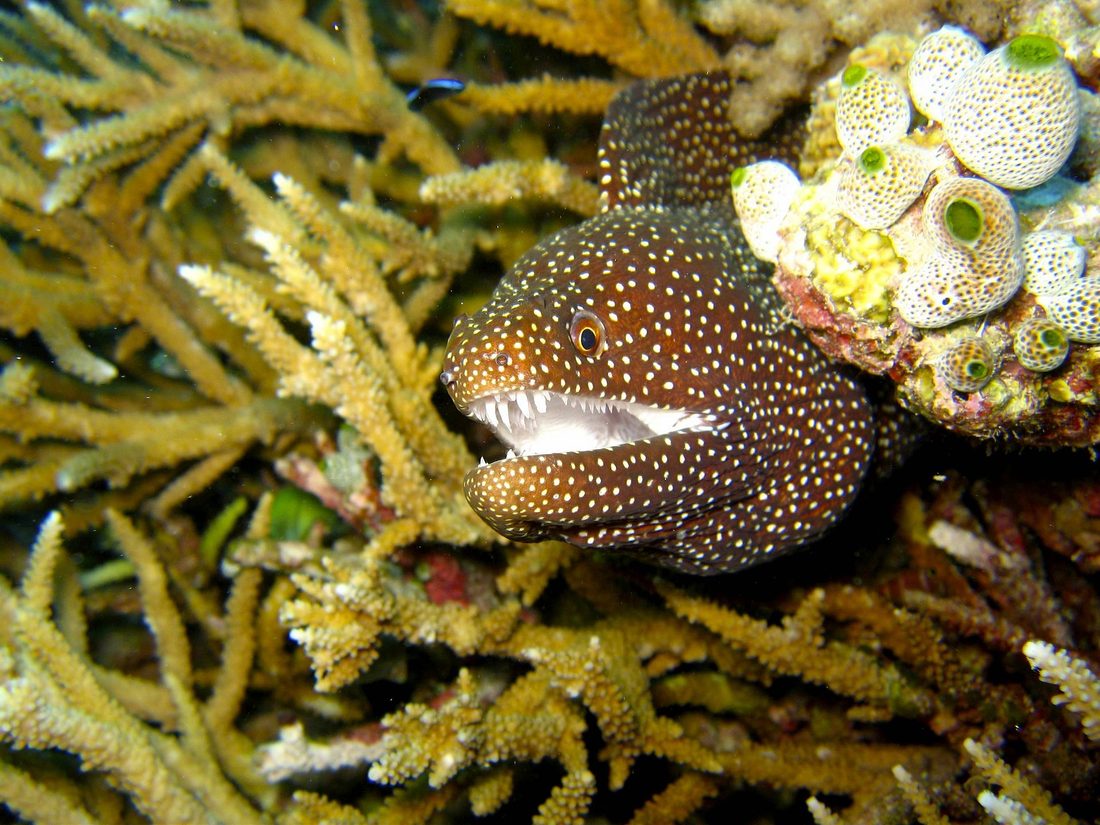
Photo: Mstroeck / CC BY-SA 3.0
Moray eels
Heads out of holes, mouths opening and closing — that is breathing, not threat. Giant and honeycomb morays both occur here. Keep fingers out of crevices and there is no issue.
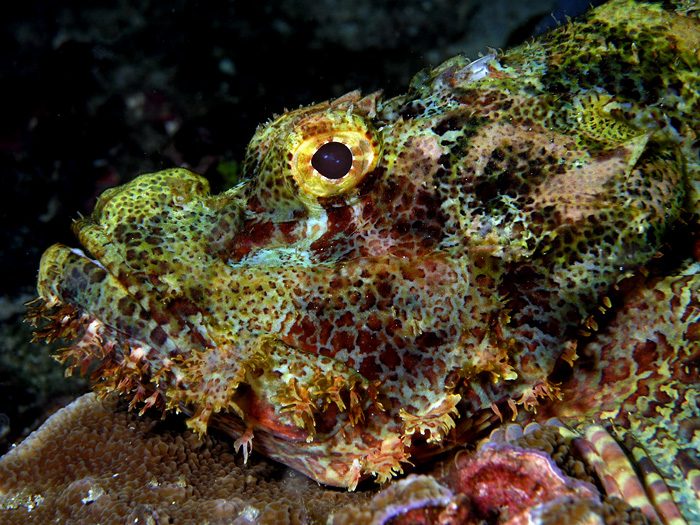
Photo: Nick Hobgood / CC BY-SA 3.0
Scorpionfish & stonefish
Superbly camouflaged ambush predators sitting motionless on rubble, with venomous dorsal spines. The single best argument for never standing on the seabed and always wearing something on your feet.
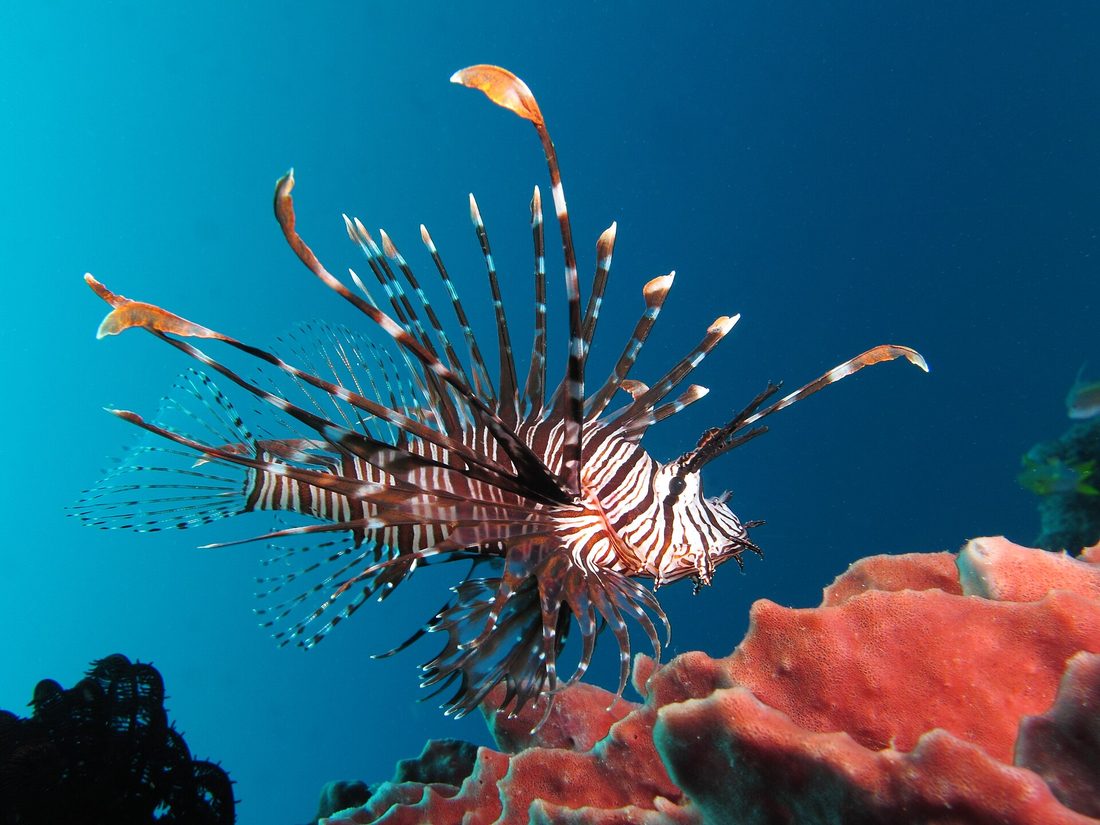
Photo: Alexander Vasenin / CC BY-SA 3.0
Lionfish
The opposite strategy — striped, fanned and openly advertising that it is venomous. Beautiful, unhurried, and native here. Admire from a metre away.
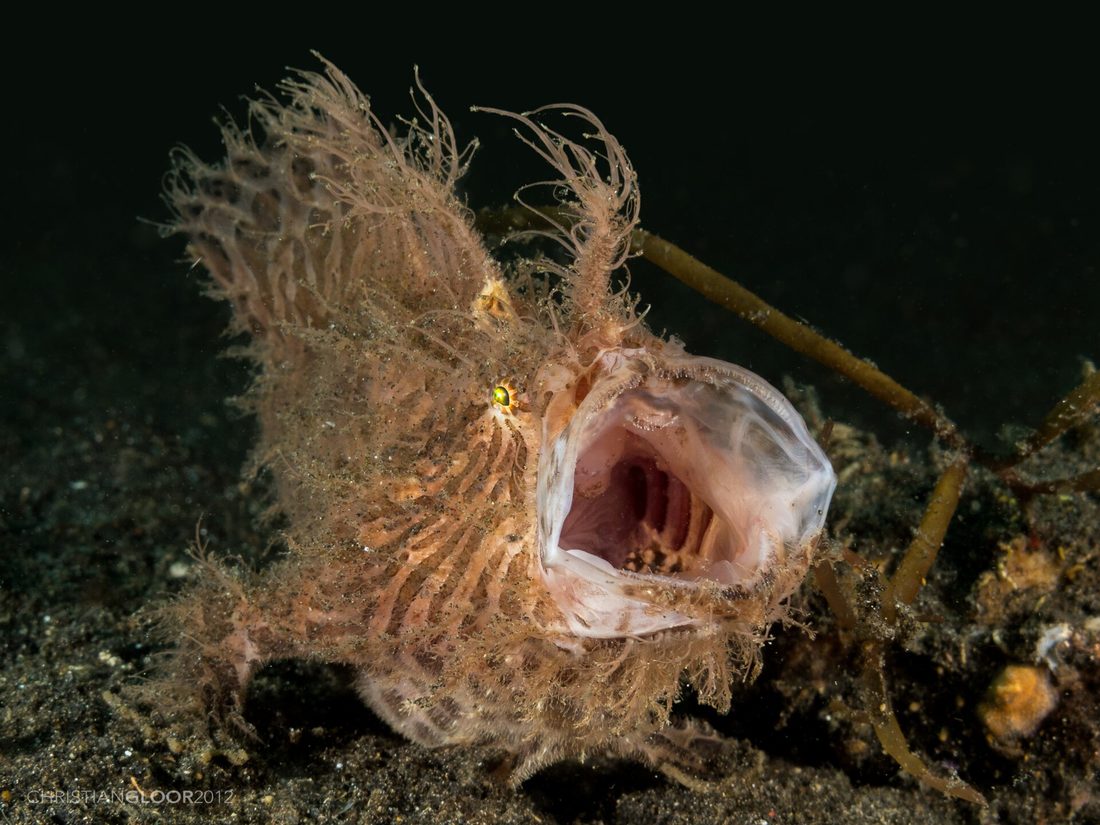
Photo: Christian Gloor / CC BY 2.0
Frogfish & ghost pipefish
Muck-diving trophies. A frogfish looks like a sponge and walks on modified fins; a ghost pipefish looks like a drifting piece of weed. Finding either yourself is a genuine achievement.
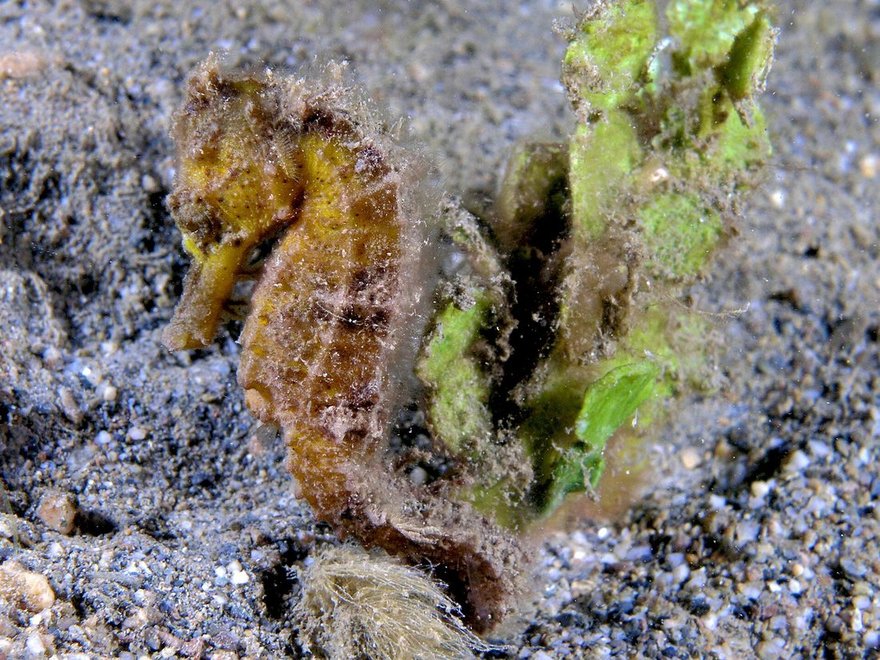
Photo: Nick Hobgood / CC BY-SA 3.0
Seahorses
In seagrass and on soft corals, tail wrapped around a stem. Males brood the eggs. Rarely seen from the surface but present in this bay.
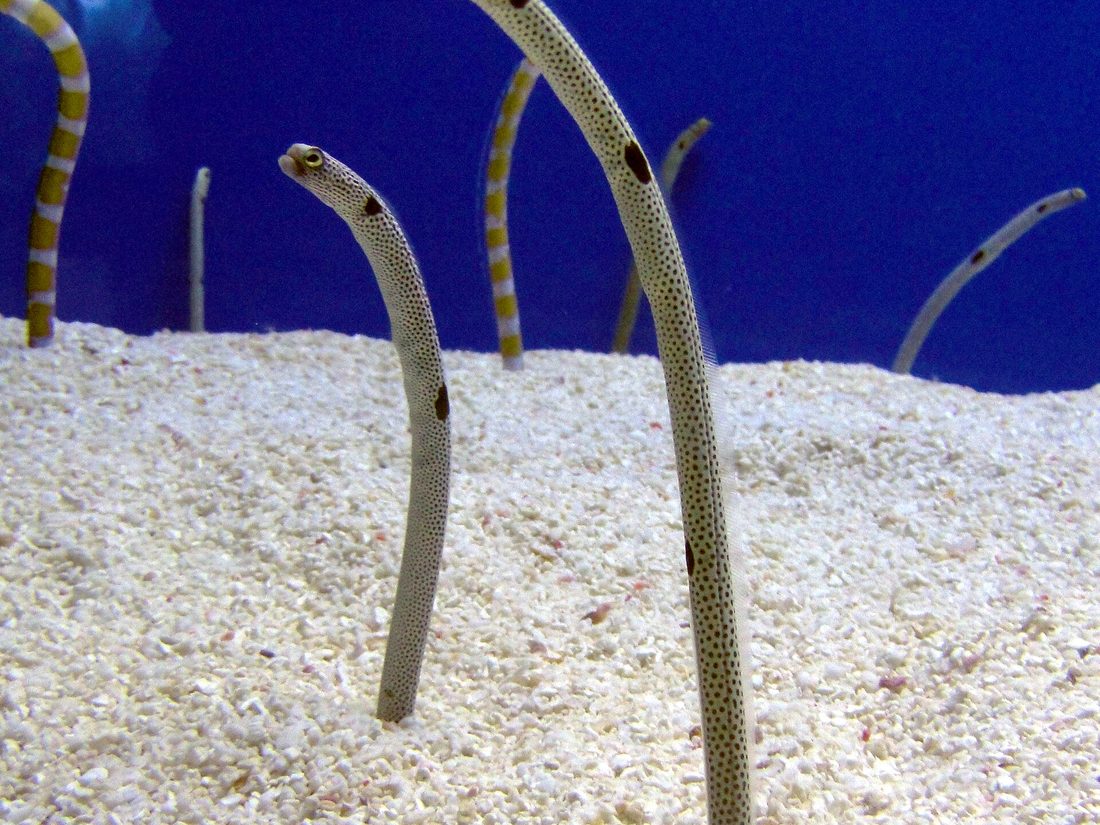
Photo: Wikimedia Commons / CC BY-SA 3.0
Garden eels
Over open sand, a field of thin bodies standing out of their burrows facing the current — and vanishing all at once as your shadow crosses them.
Sharks, rays and pelagics
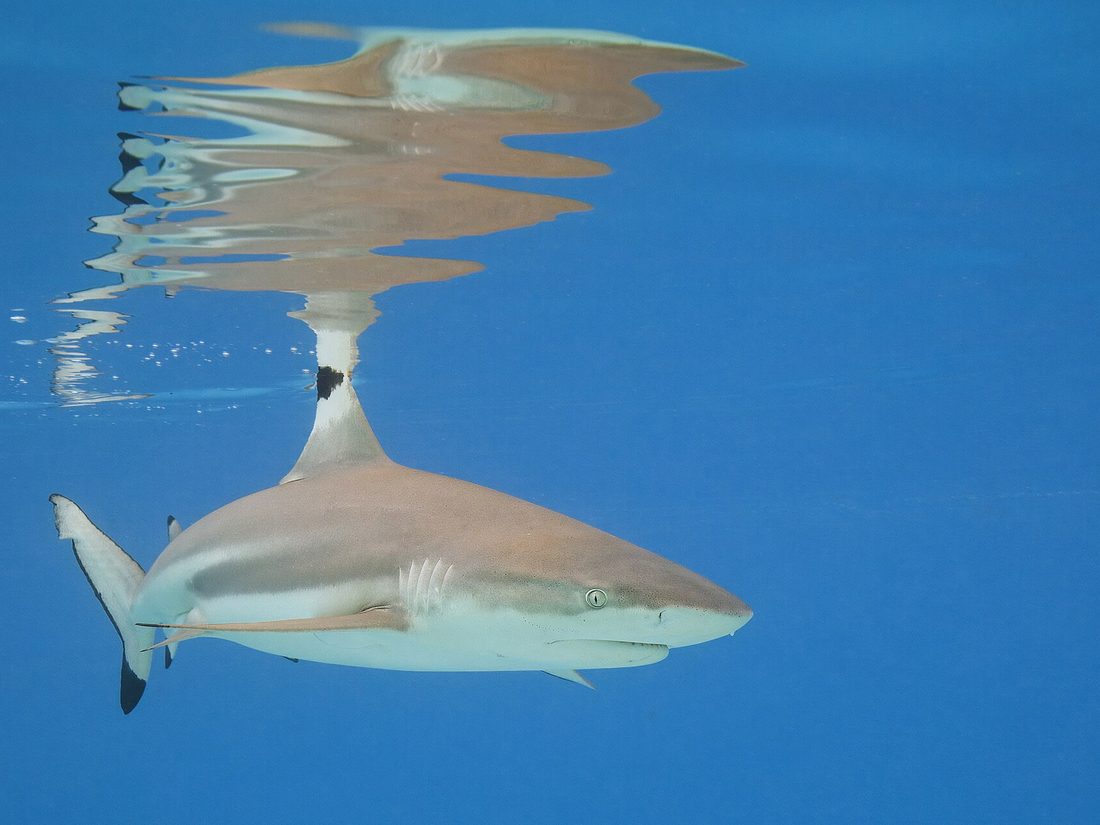
Photo: Charles J. Sharp / CC BY-SA 4.0
Reef sharks
Carcharhinus, TriaenodonBlacktip reef sharks cruise the shallow flats — usually a metre or so long and gone the instant they notice you. Whitetips rest under ledges by day. Neither is a hazard to snorkellers.
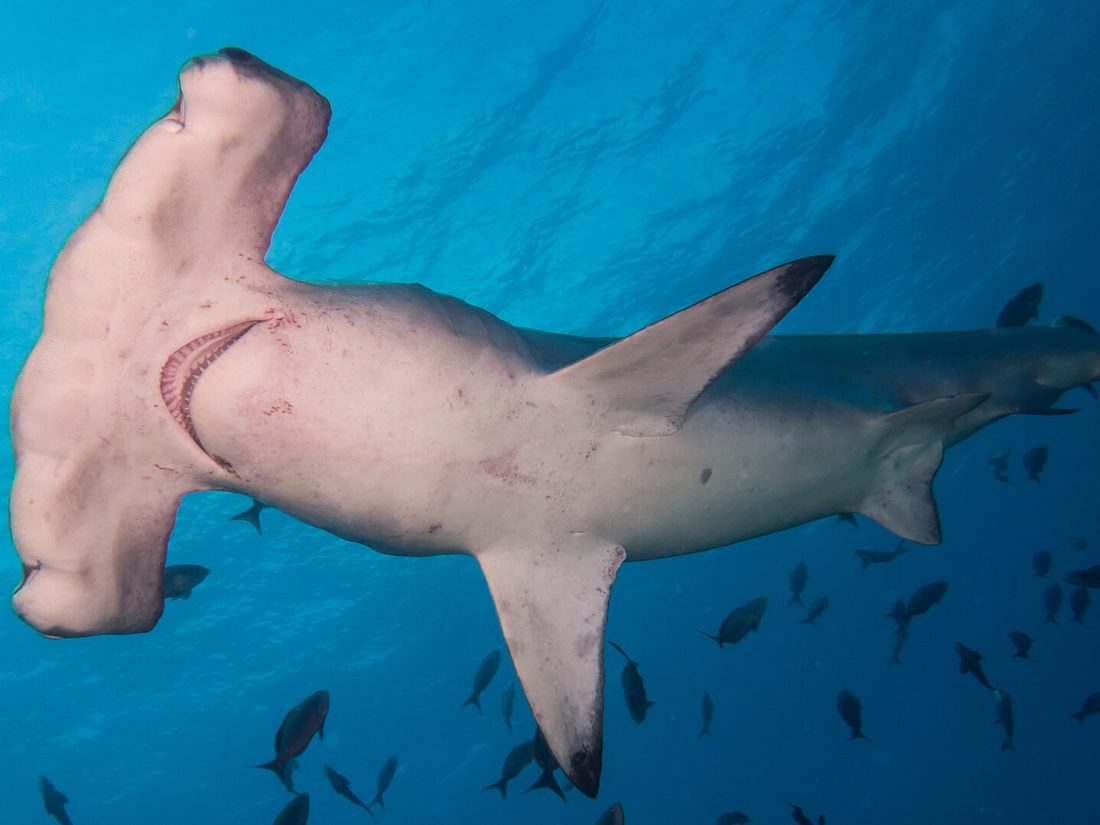
Photo: Kris Mikael Krister / CC BY 3.0
Scalloped hammerheads
Sphyrna lewiniThe pinnacle off Blongas, south-east of us, is one of very few reliable places in Indonesia to see schooling hammerheads. It is a deep, current-swept, advanced dive site — not snorkelling — but it is world-class.
Bluespotted ribbontail ray. Photo: Diego Delso / CC BY-SA 4.0
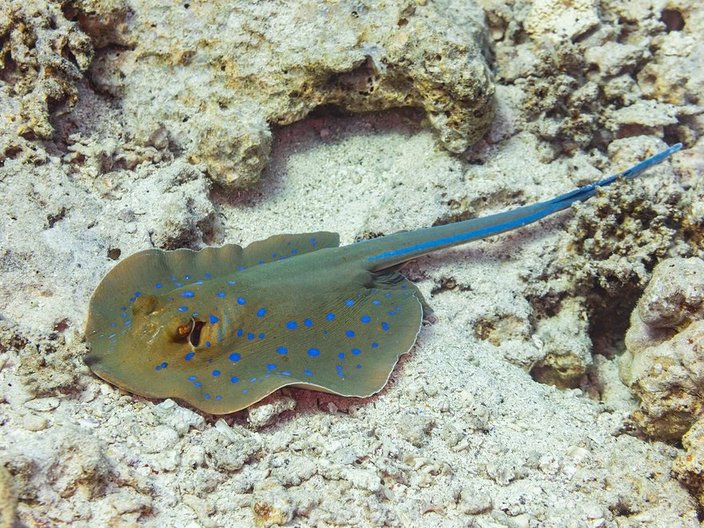
Rays
Taeniura, Aetobatus, MobulaBlue-spotted ribbontail rays lie half-buried under coral ledges. Spotted eagle rays cross open sand in small groups. Manta rays are occasional at exposed sites but not a Sekotong regular.
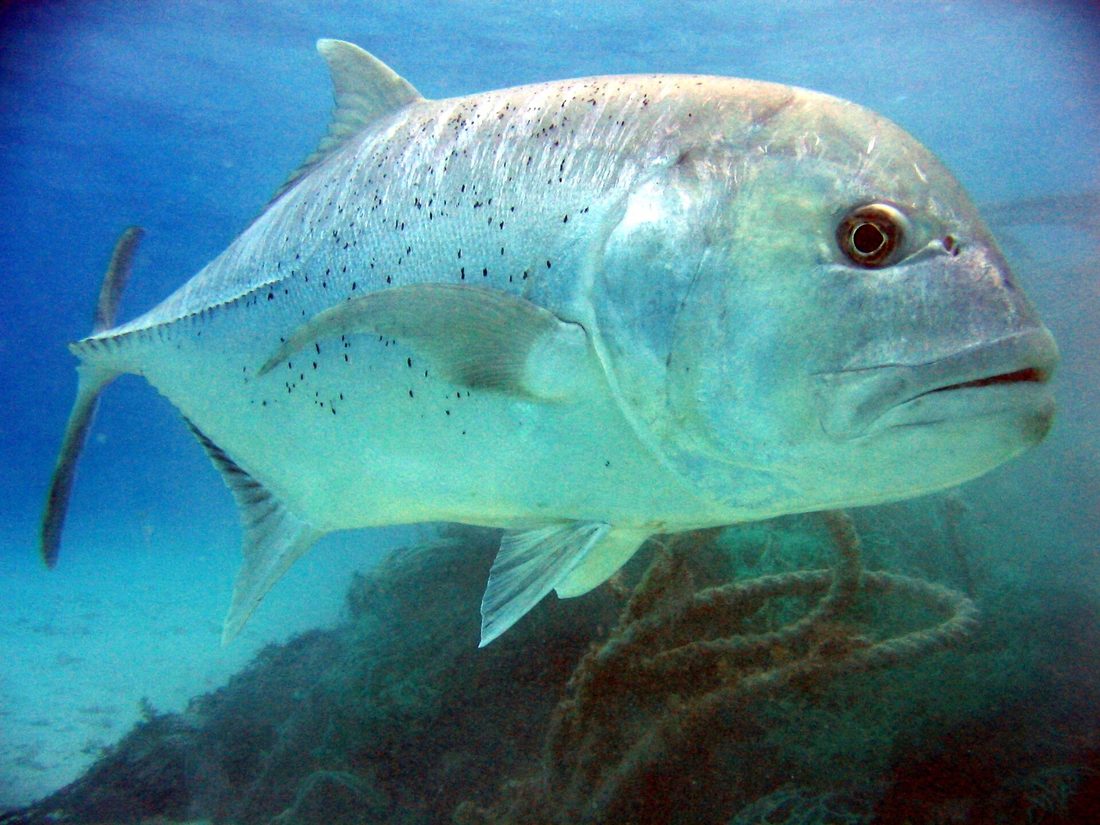
Photo: Dwayne Meadows, NOAA / Public domain
Trevally & barracuda
Caranx, SphyraenaGiant trevally hunt the drop-offs, and barracuda hang in the current looking menacing and doing nothing at all. A silver flash and a sudden scattering of small fish means one of these has arrived.
Snapper. Photo: Jens Petersen / CC BY-SA 3.0
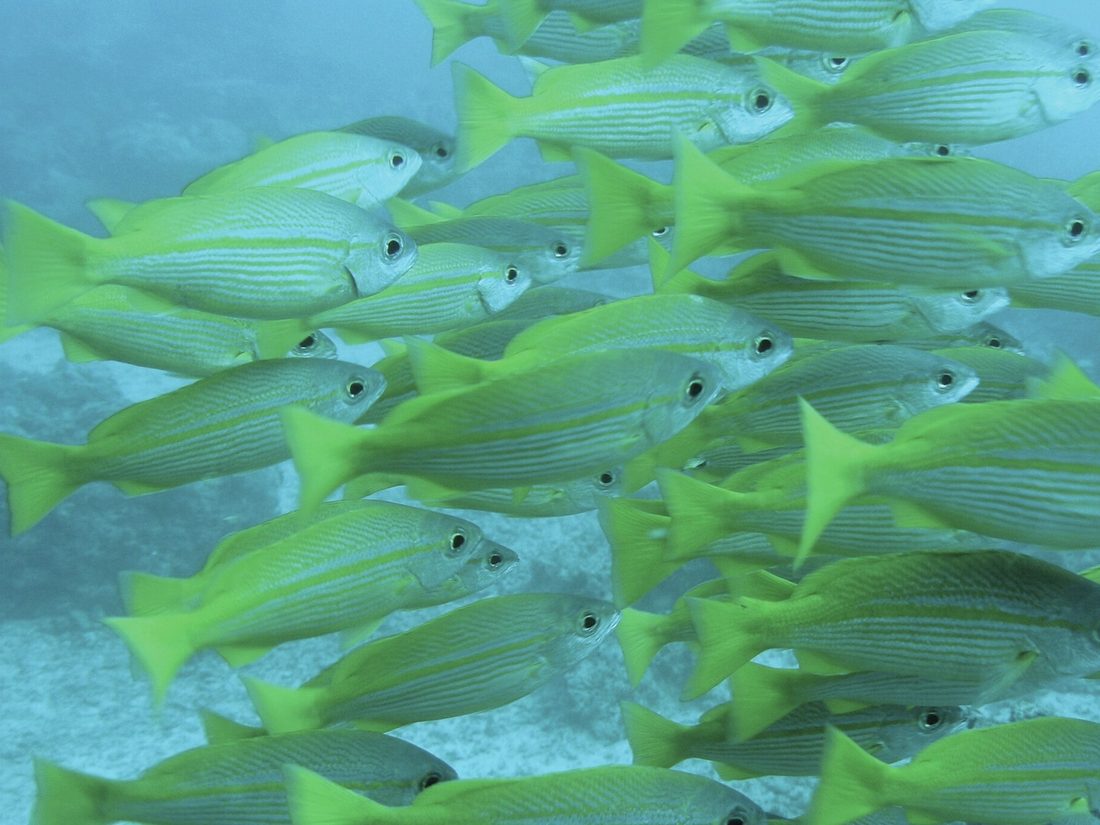
Fusiliers & snapper
Caesionidae, LutjanidaeFusiliers stream over the reef in blue-and-yellow rivers. Snapper and sweetlips hold station in the shade of a coral head, all facing the same way, waiting for dark.
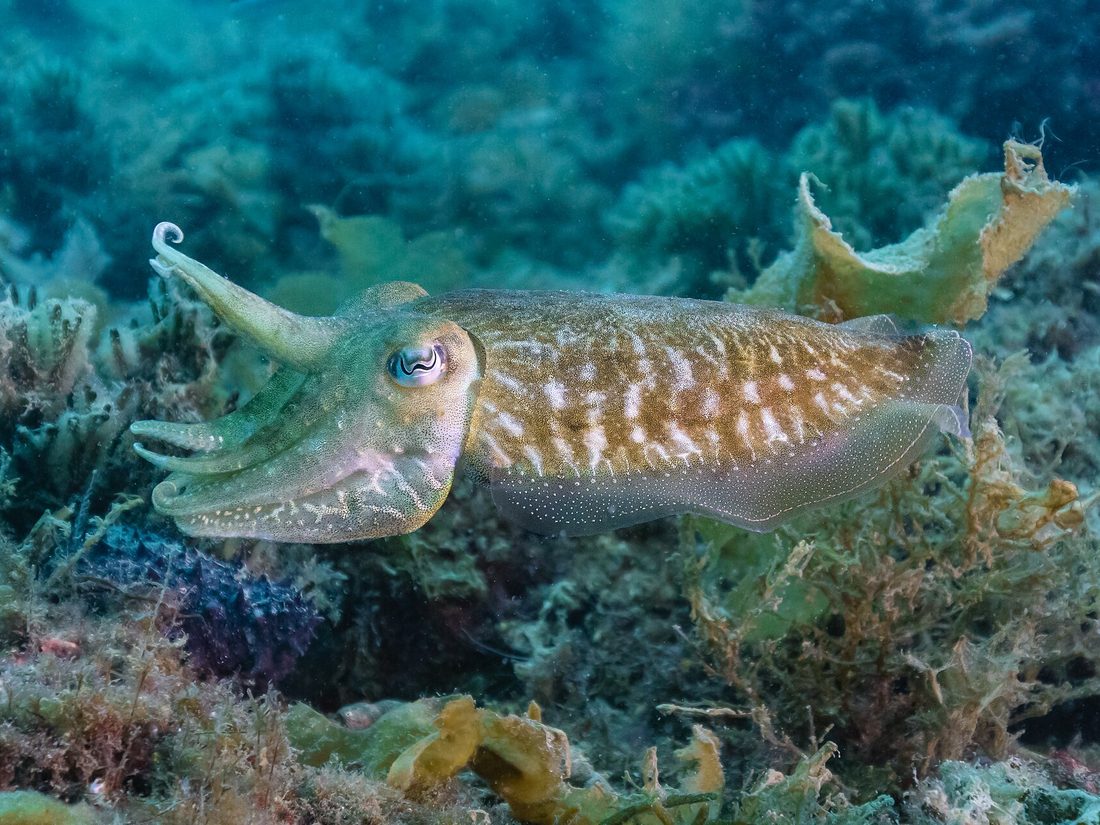
Cuttlefish. Photo: Diego Delso / CC BY-SA 4.0
Octopus & cuttlefish
CephalopodaWorth including because they are the cleverest thing down there. A cuttlefish will change colour and texture while you watch it. Give any small blue-ringed octopus a very wide berth.
At the market
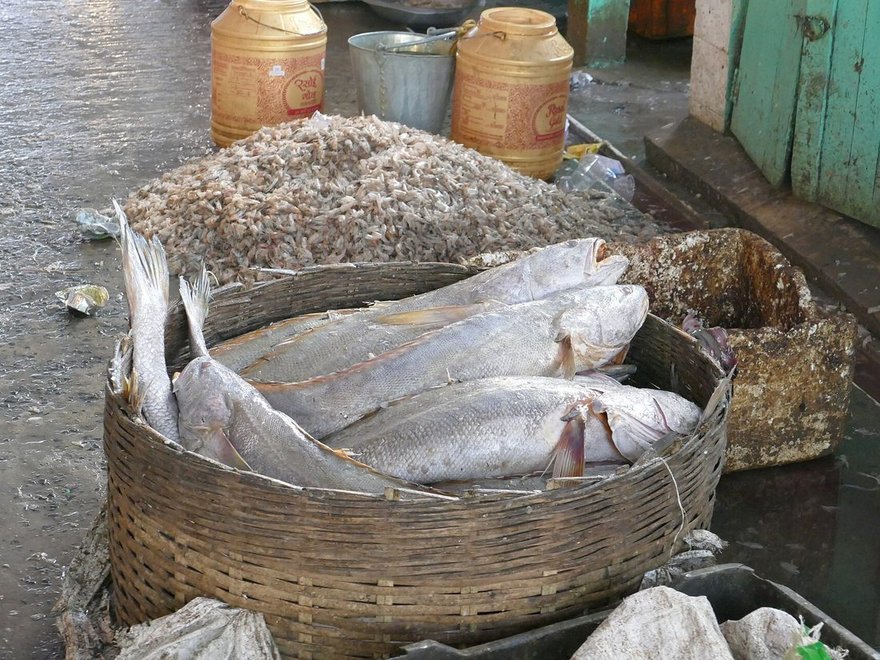
Photo: Kritzolina / CC BY-SA 4.0
What gets landed here
Skipjack and small tuna (cakalang, tongkol), mackerel (tenggiri), snapper (kakap), grouper (kerapu), squid (cumi) and reef mixed fish. The Tanjung Luar market on the east coast is the island's big landing site.
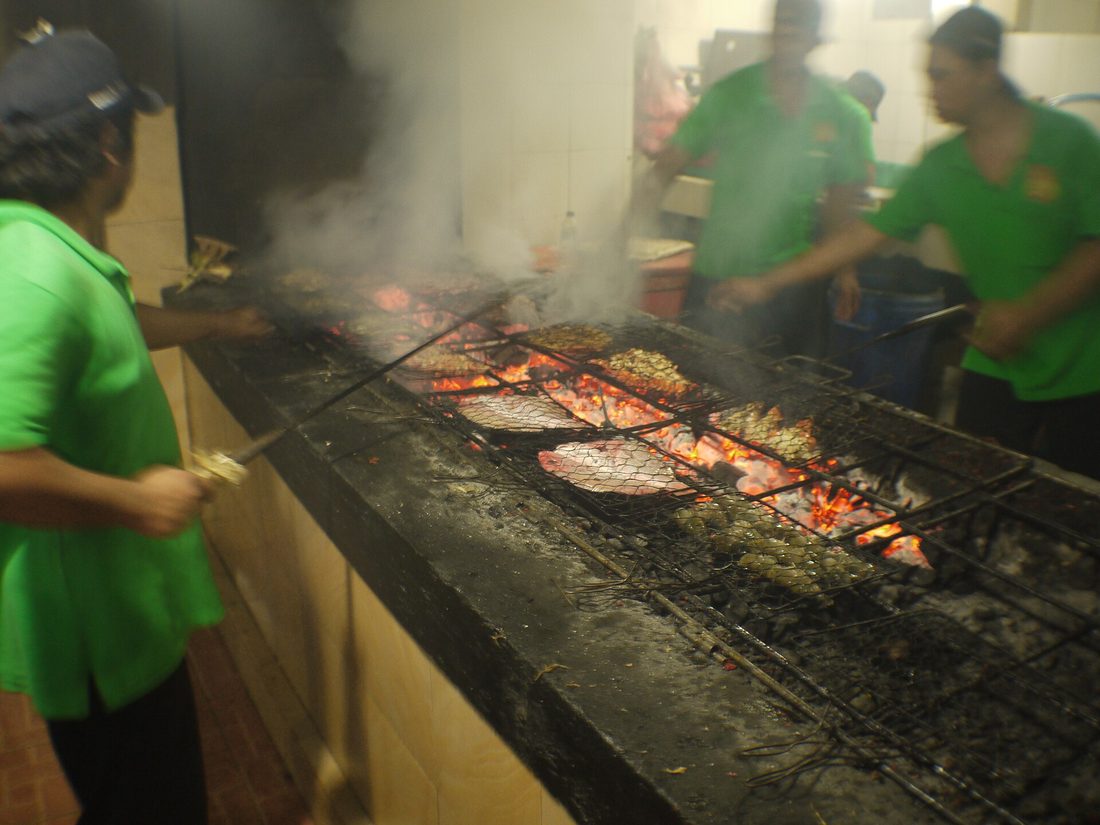
Grilling at Jimbaran. Photo: Robb1e / CC BY-SA 2.0
Eating well, and responsibly
Grilled fish with sambal and lime is the local dish worth crossing the island for. Choose smaller pelagics over large reef predators and skip shark and manta entirely — a few operators on the east coast still land them.
Snorkelling without wrecking it
Do not touch, stand on or kick coral — a single fin strike can undo years of growth. Do not feed the fish, however tame; it changes behaviour and damages their health. Do not chase anything, and never take shells, coral or a starfish home.
Wear a rash vest instead of relying on sunscreen. If you must use sunscreen, choose a reef-safe mineral one and apply it well before you get in. And keep an eye on where the kayak has drifted to.
Questions we get asked
Do I need to be a strong swimmer?
You need to be comfortable in water and able to swim. We stop in shallow, protected spots, everyone wears a buoyancy aid, and the guide stays with the group. If you are unsure, tell us before you book.
Is snorkelling gear included?
Yes, mask and snorkel are included on every trip. If you have your own mask that fits well, bring it — a leaking rental mask ruins the experience faster than anything else.
Are sharks a concern?
No. The sharks in this bay are small reef species that leave as soon as they see you. There has never been an incident on our trips.
When is the water clearest?
The dry season, April to November, and generally on the smaller tides. After heavy rain the runoff cuts visibility in the shallows for a day or two.
What should I watch out for in the water?
Stonefish and scorpionfish on the bottom, fire coral, jellyfish in some seasons, and titan triggerfish when they are nesting. All of it is manageable: keep your feet off the seabed, keep your hands to yourself, and stay with the guide.
More field guides
Local Reptiles →
Sea turtles, monitor lizards, geckos and the snakes worth knowing about.
Local Animals →
Macaques, fruit bats, sea eagles and the endemic Rinjani scops owl.
Local Flora →
Frangipani, orchids, seagrass and the beach plants that hold the sand together.
Trees →
Coconut, banyan, mangrove and the cashew and clove country inland.
Places to See →
The Secret Gilis, the south coast, the waterfalls and the Sasak villages.
Our Trips →
Discover Sea Kayaking through to six-day expeditions along the south coast.
Paddle out and put your face in
Every trip carries snorkelling gear and stops at the good coral. The day trip gets you three separate reefs.