The plants you paddle past
Lombok's name has nothing to do with chillies, whatever the Indonesian dictionary suggests — but the island does grow almost everything else. Here is what is flowering along the shoreline, under the water and up the hill.
A wet side and a dry side
Rinjani splits the island's weather in two. The north and west catch the rain and grow dense, green and fast. The south-west peninsula where we paddle is in the rain shadow — drier, scrubbier, and browner by October.
That means the flora changes dramatically over a forty-minute drive. Around Sekotong you get salt-tolerant beach plants, dry monsoon scrub and cashew. Head north and inside two hours you are in wet montane forest hung with moss and epiphytic orchids.
Beach and dune plants
These are the ones you land the kayak next to. They are all built for the same problem: salt, wind, glare and sand that will not hold water.
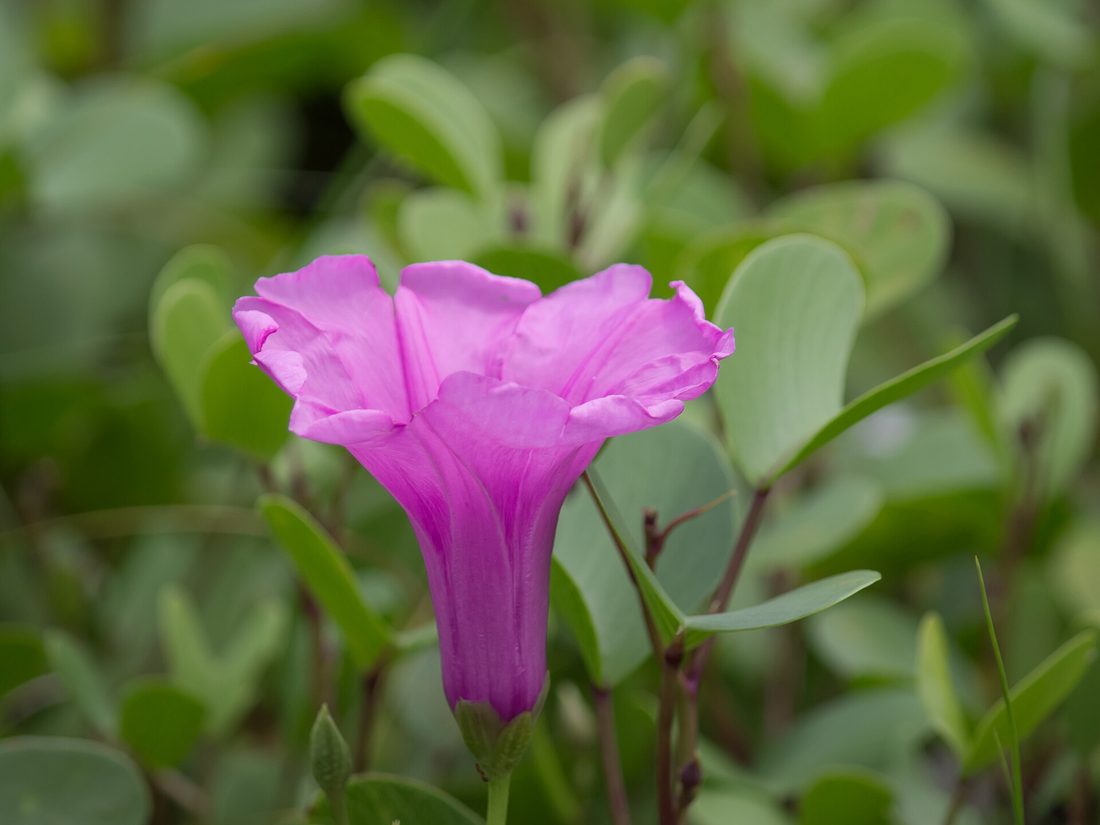
Photo: Drajay1976 / CC BY-SA 3.0
Beach morning glory
Ipomoea pes-capraeThe purple trumpet flower running in long runners across open sand above the tideline. The Indonesian name means “horse's hoof”, after the shape of the leaf. It is the first plant to colonise a bare beach and the reason the dune stays put.
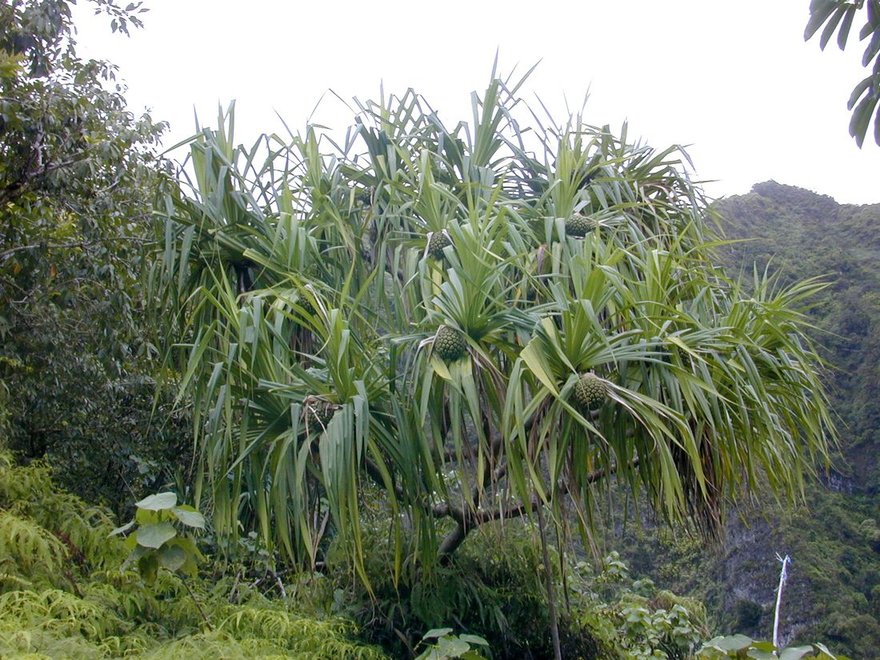
Photo: Wikimedia Commons / CC BY-SA 3.0
Screwpine
Pandanus tectoriusSpiky, strap-leaved and propped up on stilt roots, with a fruit that looks like a small pineapple. It is the shade at the back of most of the beaches we land on, and the leaves are woven into mats and roofing.
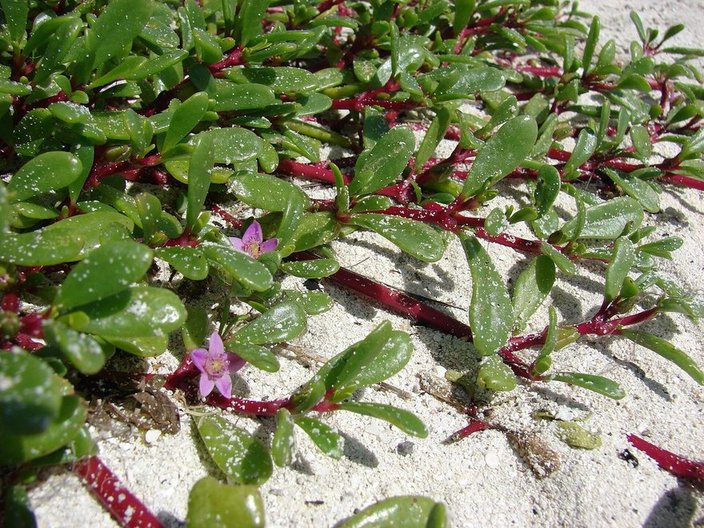
Photo: Forest & Kim Starr / CC BY 3.0
Sea purslane
Sesuvium portulacastrumLow, fleshy, red-stemmed mats with small pink flowers, right at the edge of where salt water reaches. Edible, salty, and surprisingly good in a salad if you have the nerve.
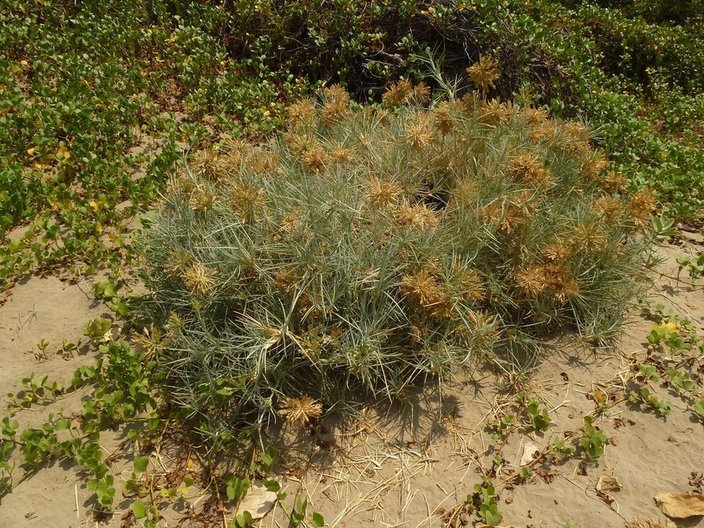
Photo: P Jeganathan / CC BY-SA 4.0
Beach spinifex
Spinifex littoreusGrey-green tussock grass with seed heads that break off and roll along the beach in the wind. Another sand-binder, and the plant that makes the low dunes on the south coast possible.
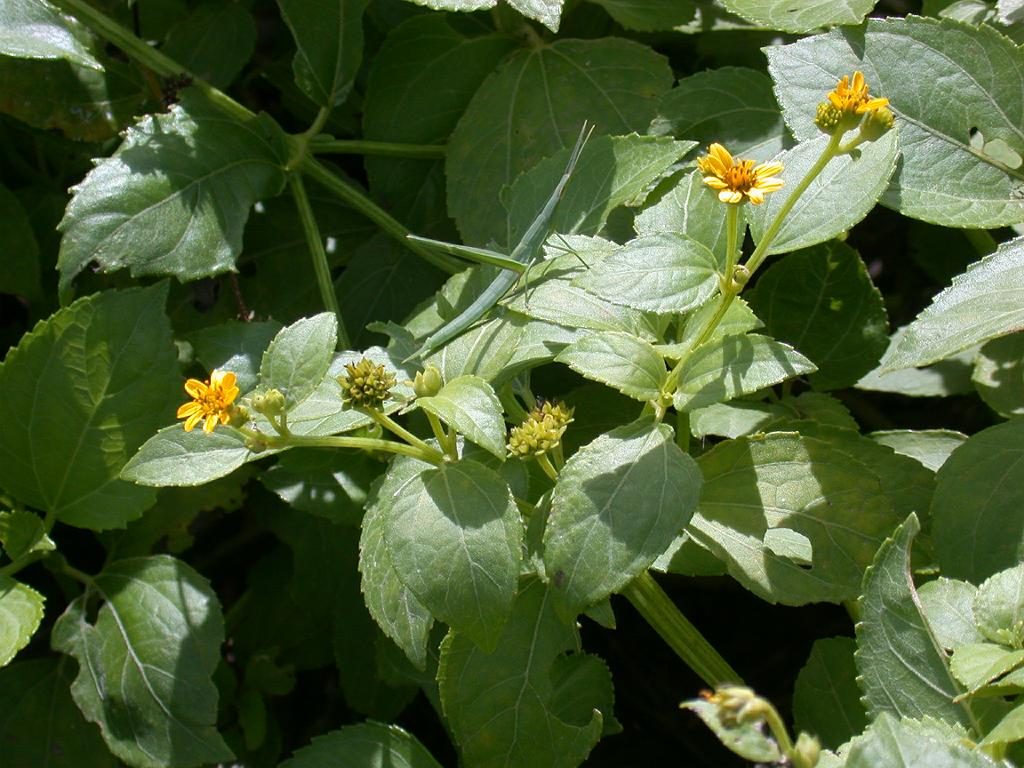
Photo: Keisotyo / CC BY-SA 4.0
Beach sunflower
Wollastonia bifloraSprawling yellow daisy that fills the gap between the morning glory and the first shrubs. Flowers year-round and is usually covered in butterflies by mid-morning.
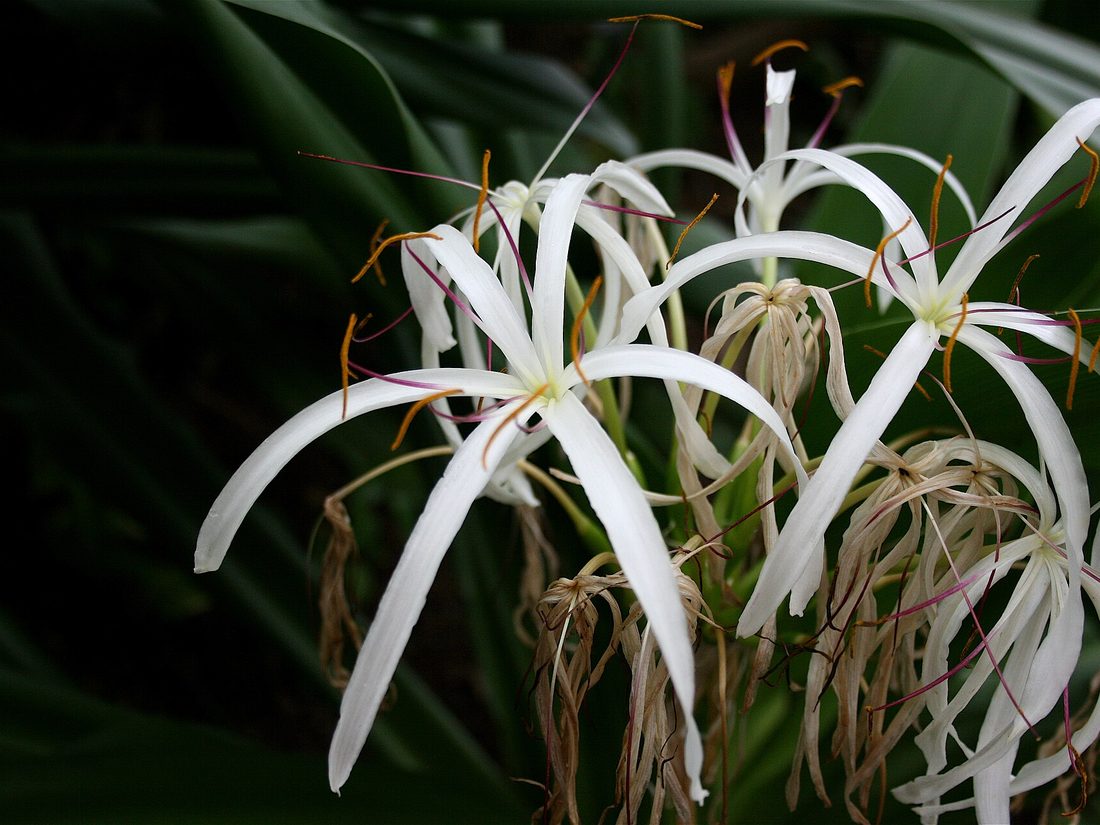
Photo: Cody Hough / CC BY-SA 3.0
Beach spider lily
Crinum asiaticumBig strap leaves and a spidery white flower that opens at night and smells extraordinary. Grows in clumps just behind the beach. All parts are toxic — admire, do not chew.
Seagrass, and why it matters
Between the beach and the coral there is usually a wide band of what looks like underwater lawn. That is seagrass, and it is doing more work than anything else in the bay.
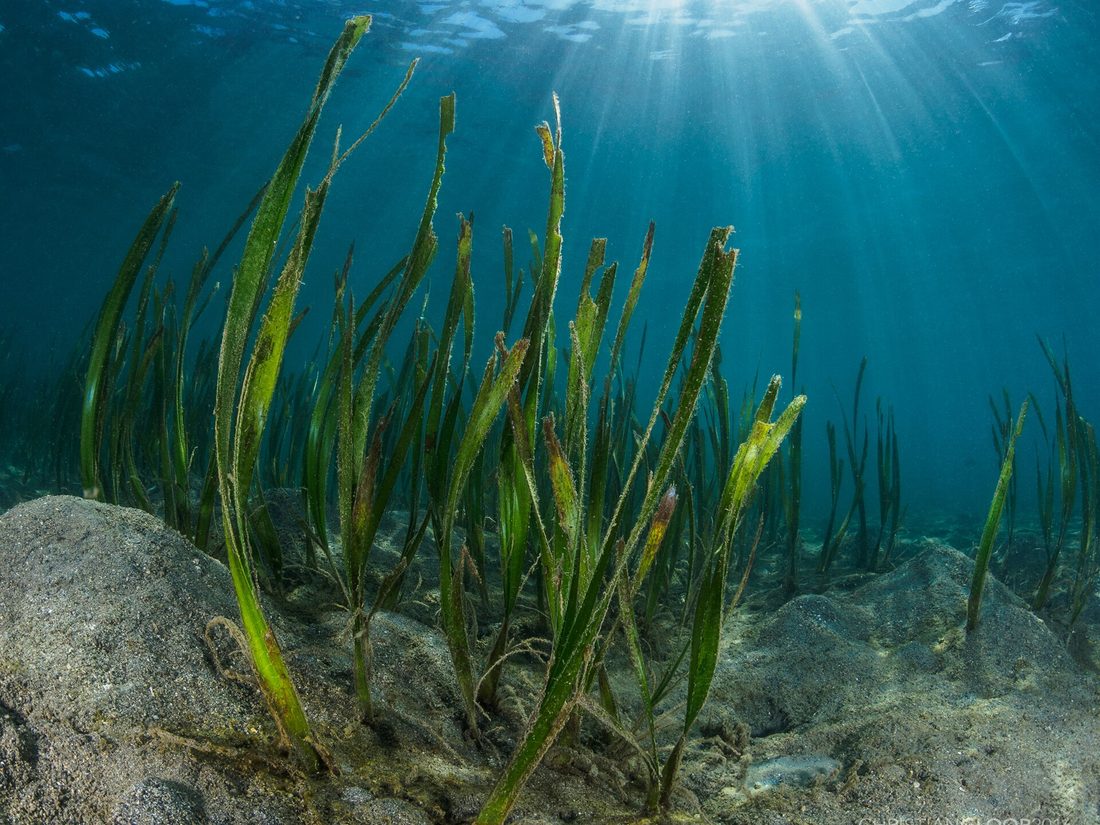
Photo: Christian Gloor / CC BY 2.0
Tape seagrass
Enhalus acoroides
The big one — long ribbon leaves up to a metre, growing in soft mud and sand. It is the main food of green turtles and the reason you meet them in the shallows.
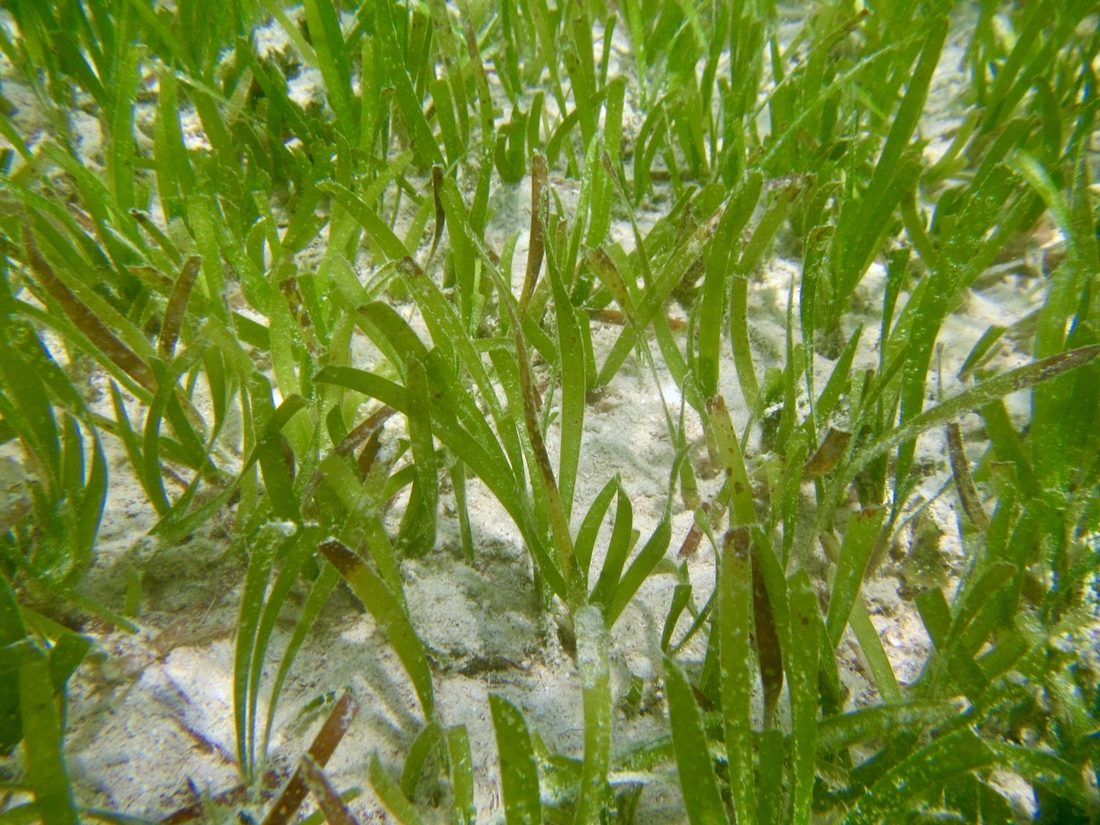
Photo: Nuraini Arsad / CC0
Turtlegrass relatives
Thalassia hemprichii
Shorter, blade-like and denser. Forms the meadows that juvenile reef fish shelter in before they are big enough to risk life on the coral.
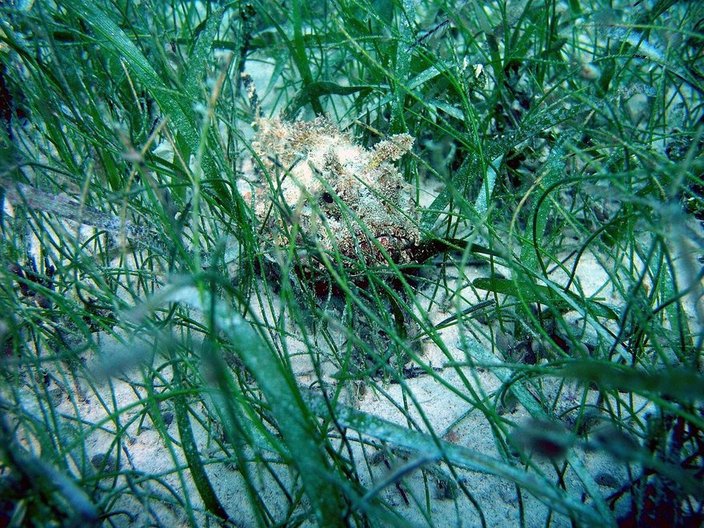
Photo: National Marine Sanctuaries / Public domain
Why we ask you not to stand
Seagrass stabilises sediment, keeps the water clear over the coral, and stores carbon at a rate that embarrasses most forests. It also takes years to recover from a scar. Float, do not trample.
The flowers you will see everywhere
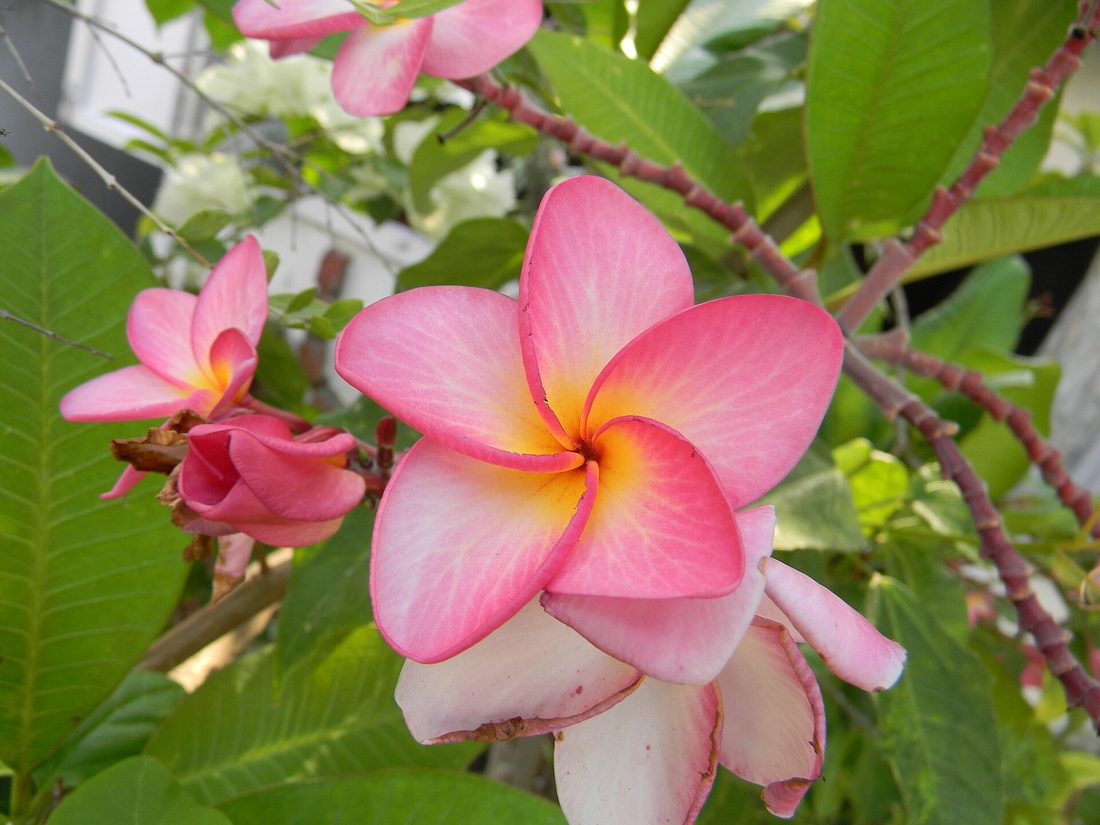
Photo: Varun Pabrai / CC BY-SA 4.0
Frangipani
Plumeria spp.The white-and-yellow flower on every temple wall and hotel path, with a scent that gets stronger after dark. In Balinese Hindu practice it is a temple offering flower — you will see it tucked behind ears and laid on shrines.
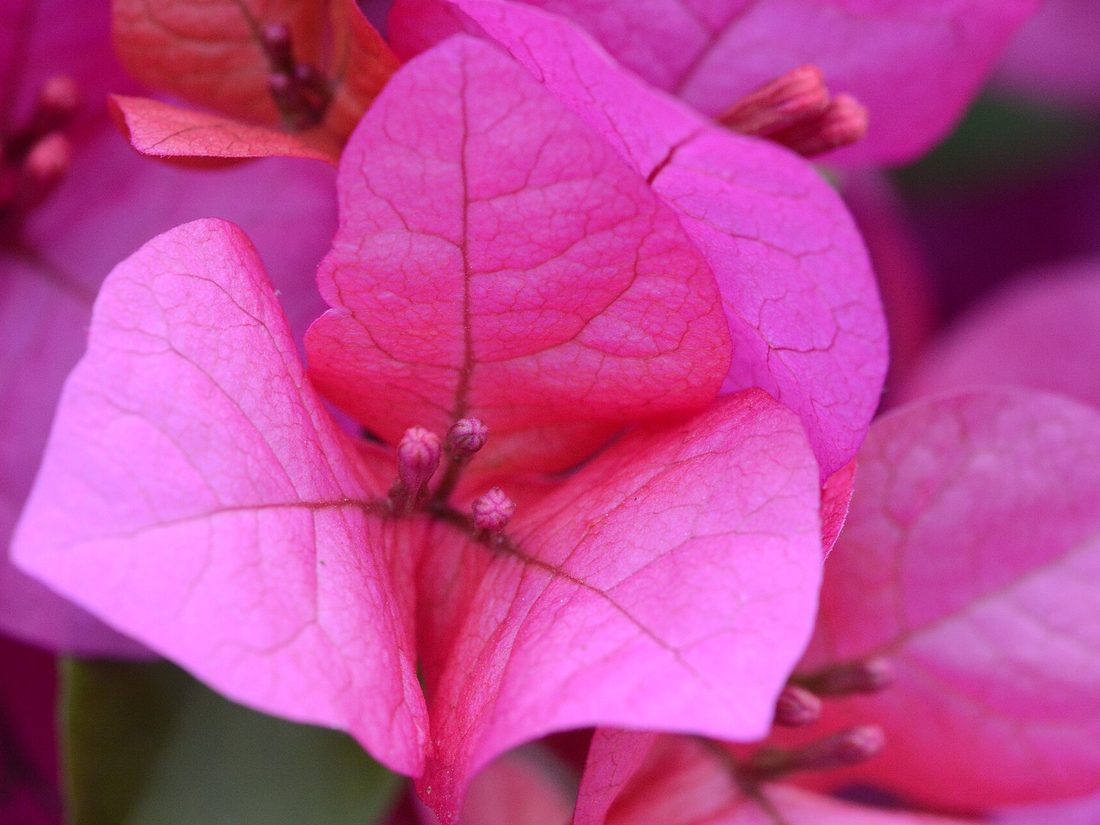
Photo: Clint Budd / CC BY 2.0
Bougainvillea
Bougainvillea spp.Magenta, orange and white, spilling over every wall in Sekotong. The colourful part is not the flower but modified leaves — hence the local name, “paper flower”.
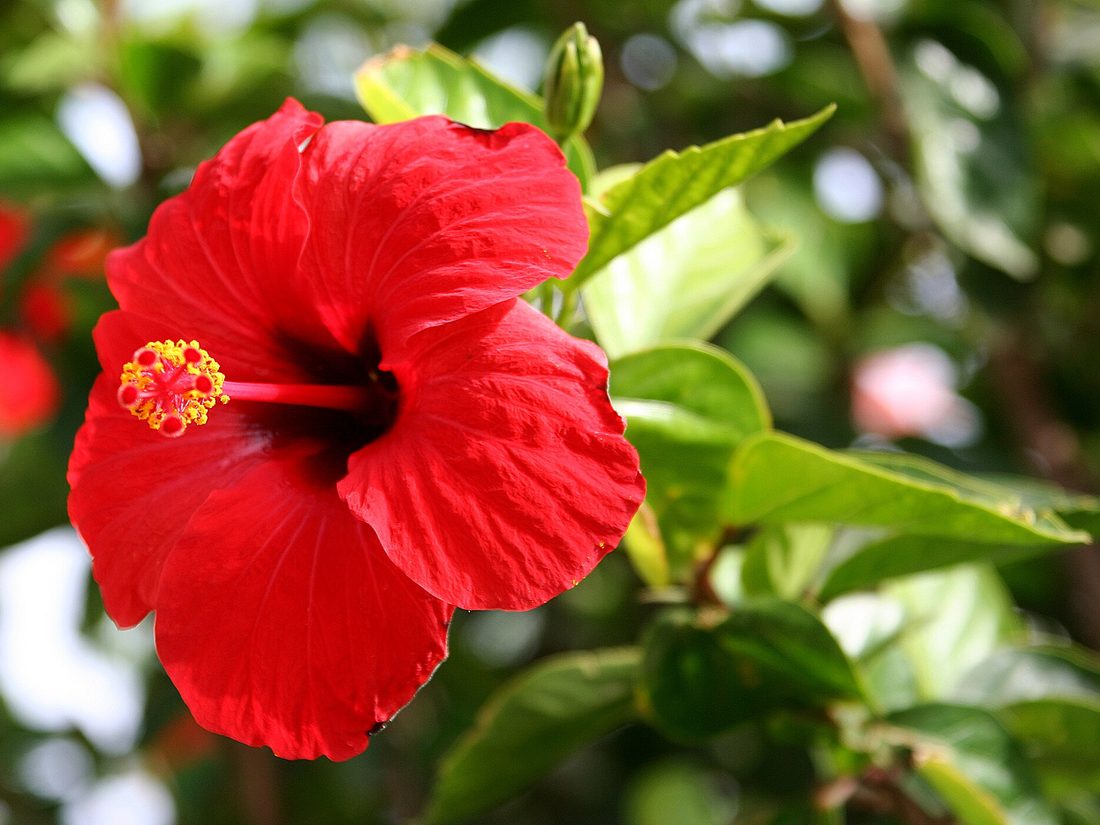
Photo: Andrew Fogg / CC BY 2.0
Hibiscus
Hibiscus rosa-sinensisBig scarlet trumpets in hedges along village lanes. The Indonesian name translates as “shoe flower”, from an old use of the crushed petals as shoe polish.
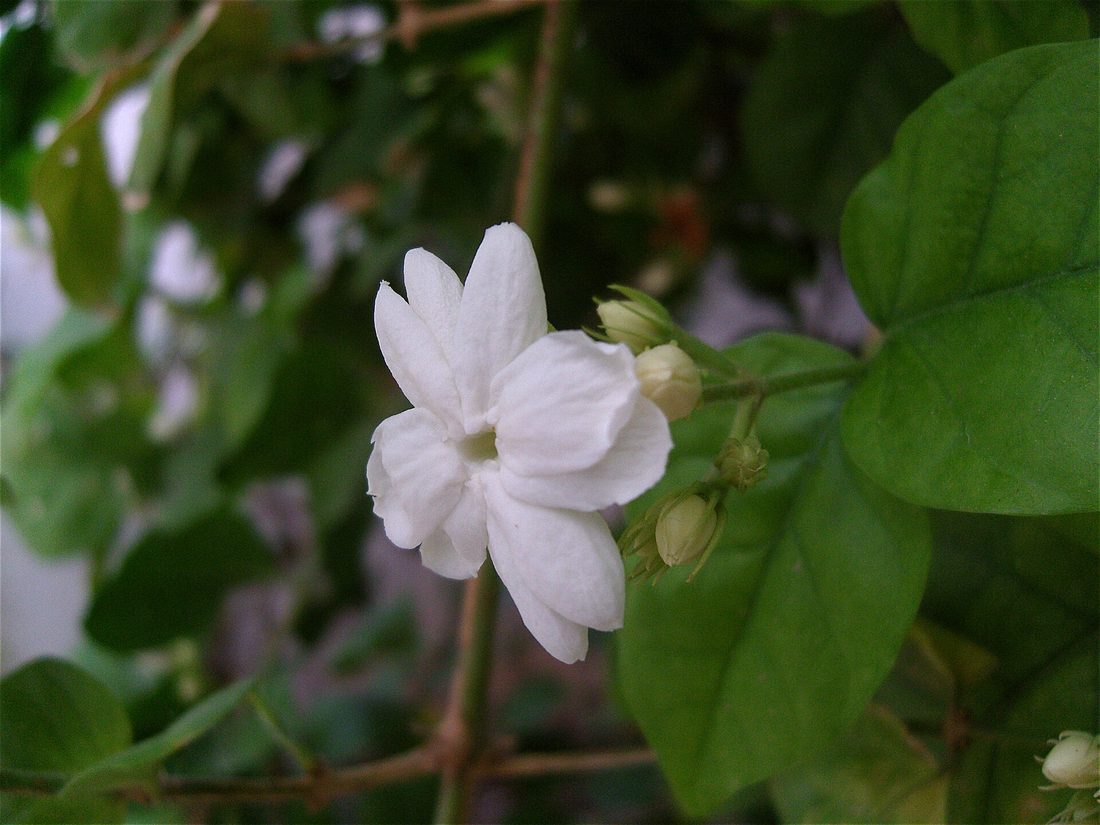
Photo: Habib M'henni / CC BY-SA 3.0
Arabian jasmine
Jasminum sambacOne of Indonesia's three national flowers and central to weddings across the archipelago. Small, white, and out of all proportion in scent to its size. Grown in half the front yards on the island.
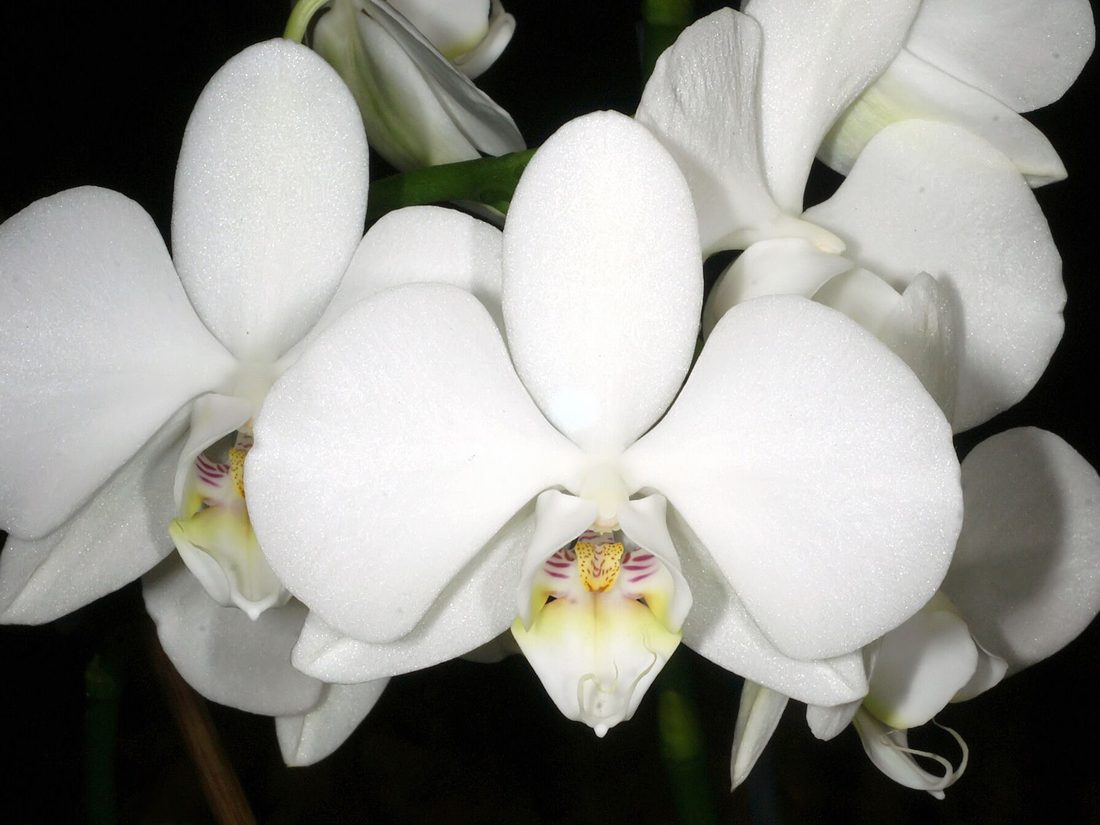
Photo: Orchi / CC BY-SA 3.0
Moon orchid
Phalaenopsis amabilisThe national “flower of charm”. Wild epiphytic orchids grow on trees in the wetter forest north and east; the ones in pots outside houses are usually nursery stock.
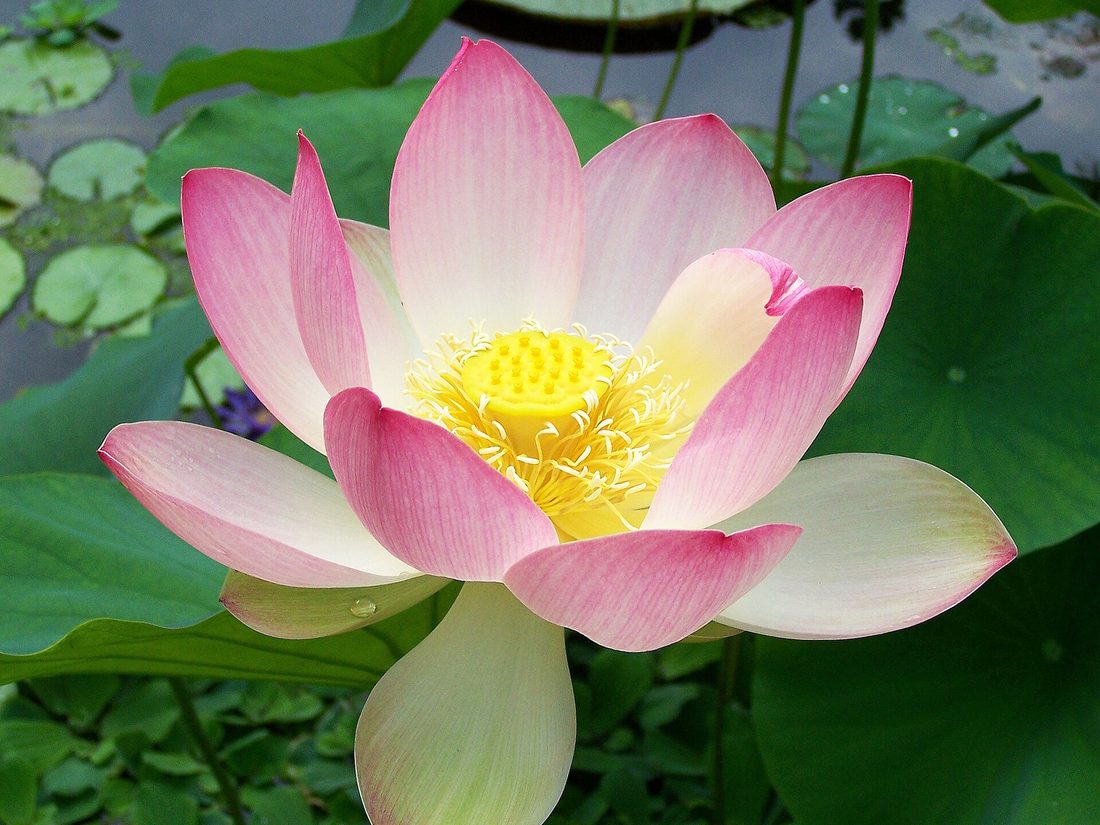
Photo: T. Voekler / CC BY-SA 3.0
Lotus and water lily
Nelumbo & NymphaeaFilling the temple tanks at Narmada and Lingsar. Lotus stands clear of the water on a stalk; water lily floats flat on the surface. Both open in the morning and close through the afternoon.
Rinjani's high flora
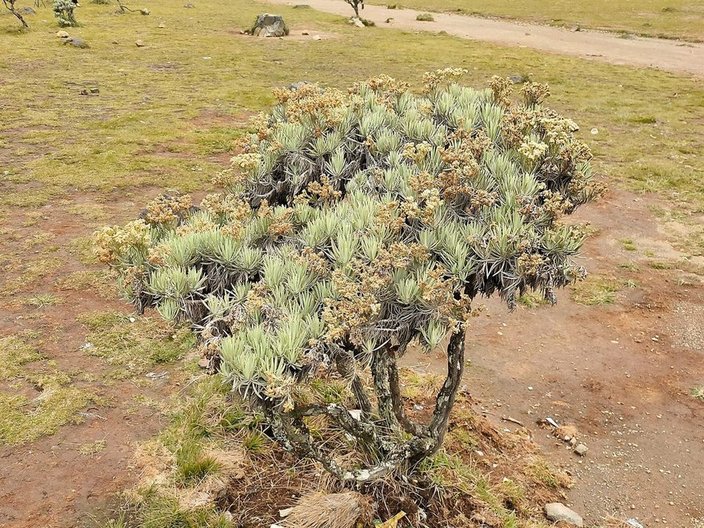
Photo: Afrogindahood / CC BY 4.0
Javanese edelweiss
Anaphalis javanicaThe papery white “everlasting flower” of the high slopes, above the tree line. It is protected — picking it is illegal in the national park, and it is a genuine problem on the trekking routes. Photograph it and leave it standing.
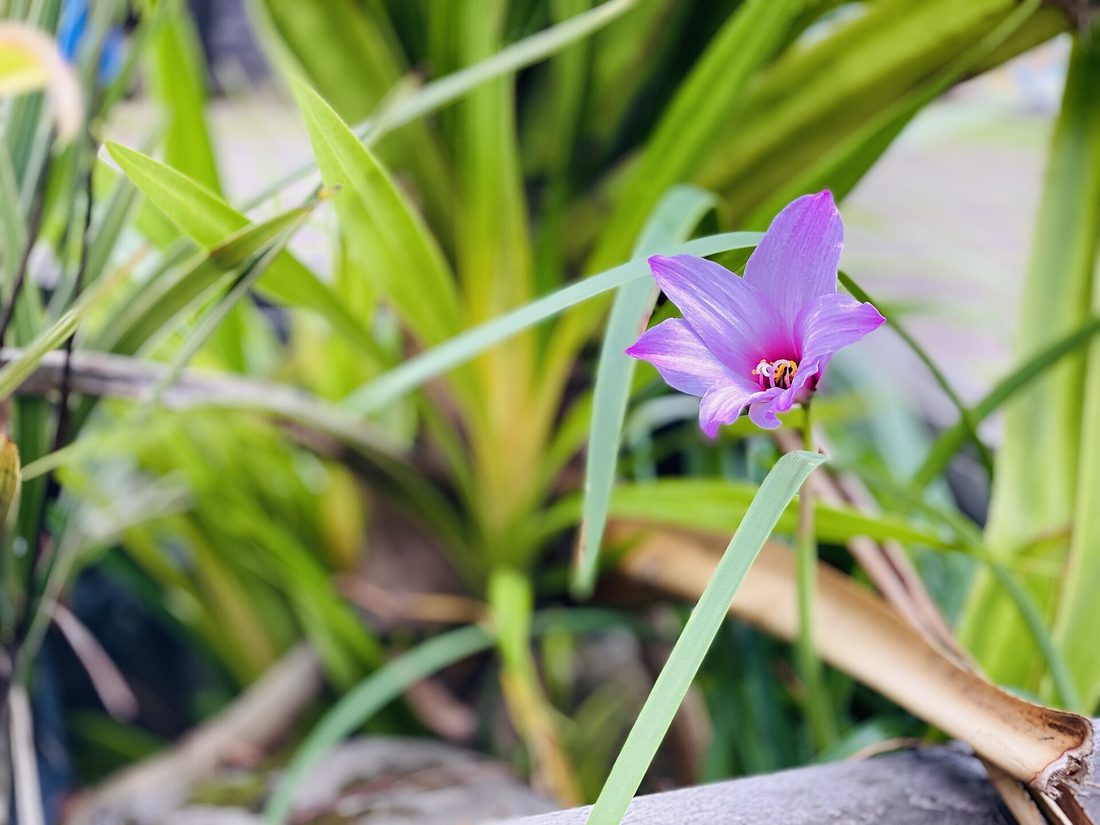
Photo: Adesolive / CC BY-SA 4.0
Montane epiphytes
Orchidaceae, ferns, mossesBetween roughly 1,200 and 2,000 metres the forest is hung with tree ferns, mosses and epiphytic orchids feeding on mist rather than soil. This is a completely different island from the one you launched the kayak on.
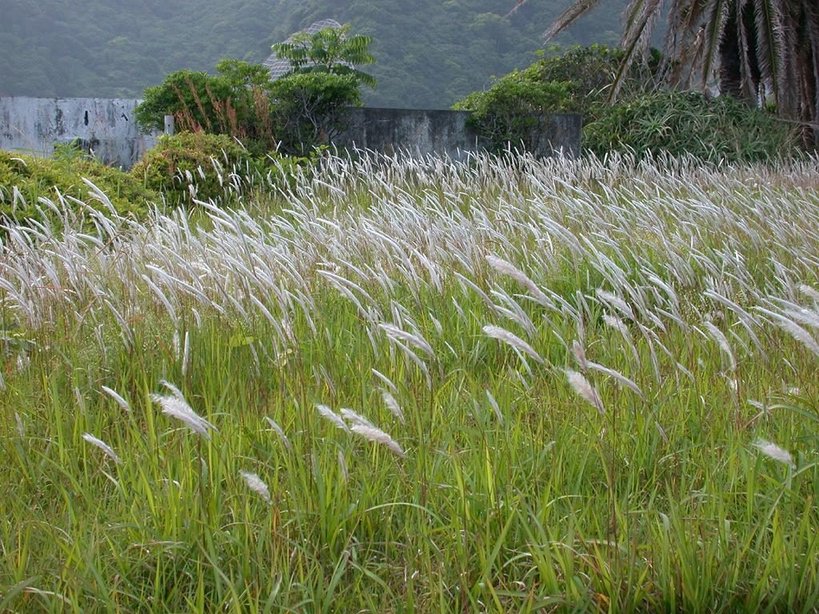
Photo: Wikimedia Commons / CC BY-SA 3.0
Alang-alang grass
Imperata cylindricaThe tall silver-headed grass covering cleared hillsides. Fire-adapted, hard to shift, and traditionally cut for thatching Sasak roofs — including the ones at Sade.
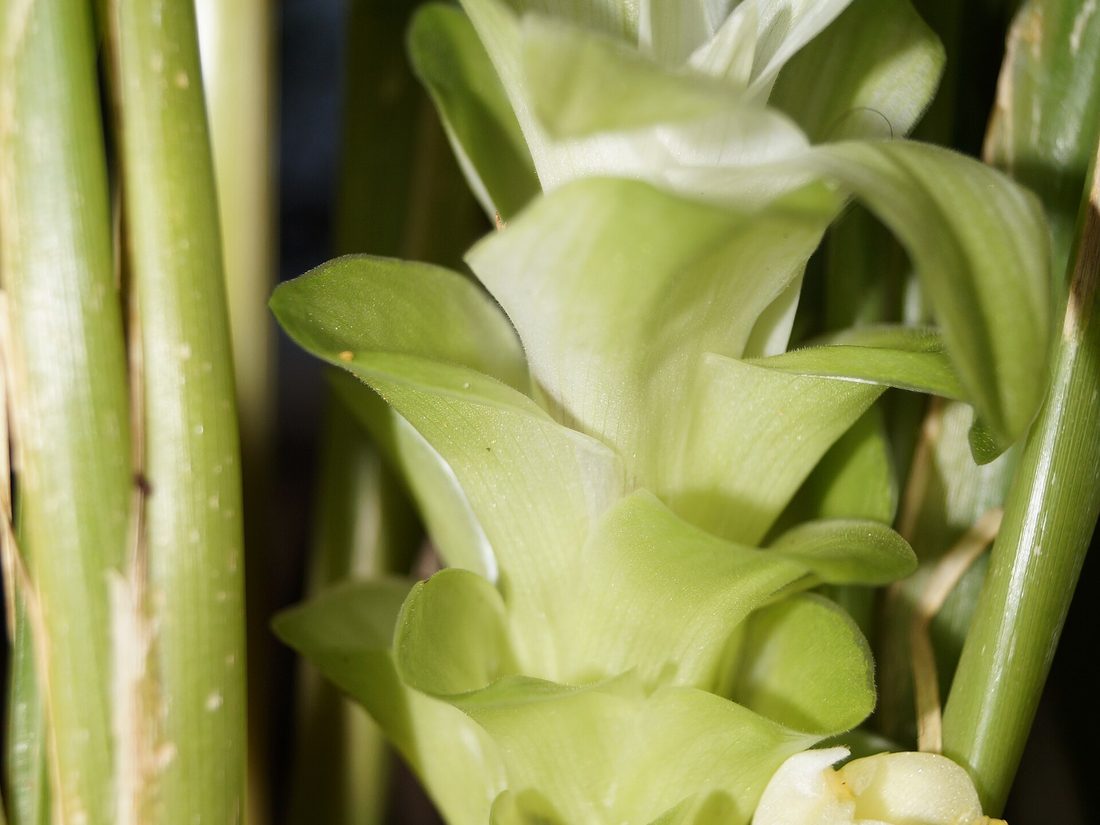
Photo: SKsiddhartthan / CC BY-SA 4.0
Spice and crop gardens
Zingiber, Curcuma, CapsicumGinger, turmeric, galangal, lemongrass and chilli grow in kitchen gardens everywhere. Higher up the slopes it turns to coffee, cloves, vanilla and cacao under shade trees.
Questions we get asked
Does “Lombok” really mean chilli?
Lombok is the Javanese word for chilli, which makes for a good story, but the island's name is generally traced to the Sasak word Lomboq, meaning “straight”. Chillies do grow well here regardless, and the local cooking makes full use of them.
When is the best time for flowers?
The end of the wet season, roughly February to April, is when everything is greenest and most is in flower. By September and October the south-west peninsula has gone brown and dusty, though frangipani, bougainvillea and hibiscus flower right through.
Is anything here dangerous to touch?
Very little, but be sensible. Beach spider lily and oleander are toxic if eaten, and some coastal figs and euphorbias have a milky sap that irritates skin. The bigger risk on a beach walk is standing on something in the water, not brushing a plant.
Can I take seeds or cuttings home?
Please do not. Australia and most other countries prohibit importing plant material without a permit, and taking anything at all out of Rinjani National Park is illegal.
More field guides
Trees →
Coconut, banyan, mangrove and the cashew and clove country inland.
Local Animals →
Macaques, fruit bats, sea eagles and the endemic Rinjani scops owl.
Local Reptiles →
Monitor lizards, sea turtles, geckos and the snakes worth knowing about.
Fish →
What is under the kayak, from clownfish to the hammerheads of Blongas.
Places to See →
The Secret Gilis, the south coast, the waterfalls and the Sasak villages.
Our Trips →
Discover Sea Kayaking through to six-day expeditions along the south coast.
See it from the water
Our guides know the local names for most of this, and are happy to stop the kayak while you look at a plant.