Geckos on the wall, turtles under the hull
Lombok's reptiles are the wildlife most guests actually meet — usually a gecko in the bungalow on night one, and if you are lucky a green turtle surfacing beside the kayak on day two.
No, there are no Komodo dragons here
Komodo dragons live on Komodo, Rinca and a few neighbouring islands in the Lesser Sundas, roughly 250 kilometres east of us. There are none on Lombok, wild or otherwise.
What we do have is the water monitor — a large, handsome and entirely different lizard that is often mistaken for one by visitors seeing a two-metre reptile crossing a beach. It is harmless if you leave it alone.
Sea turtles
Sekotong Bay's seagrass meadows and shallow reefs are turtle habitat, and encounters from a kayak are common enough that we no longer treat them as remarkable — though everyone in the boat still shouts.
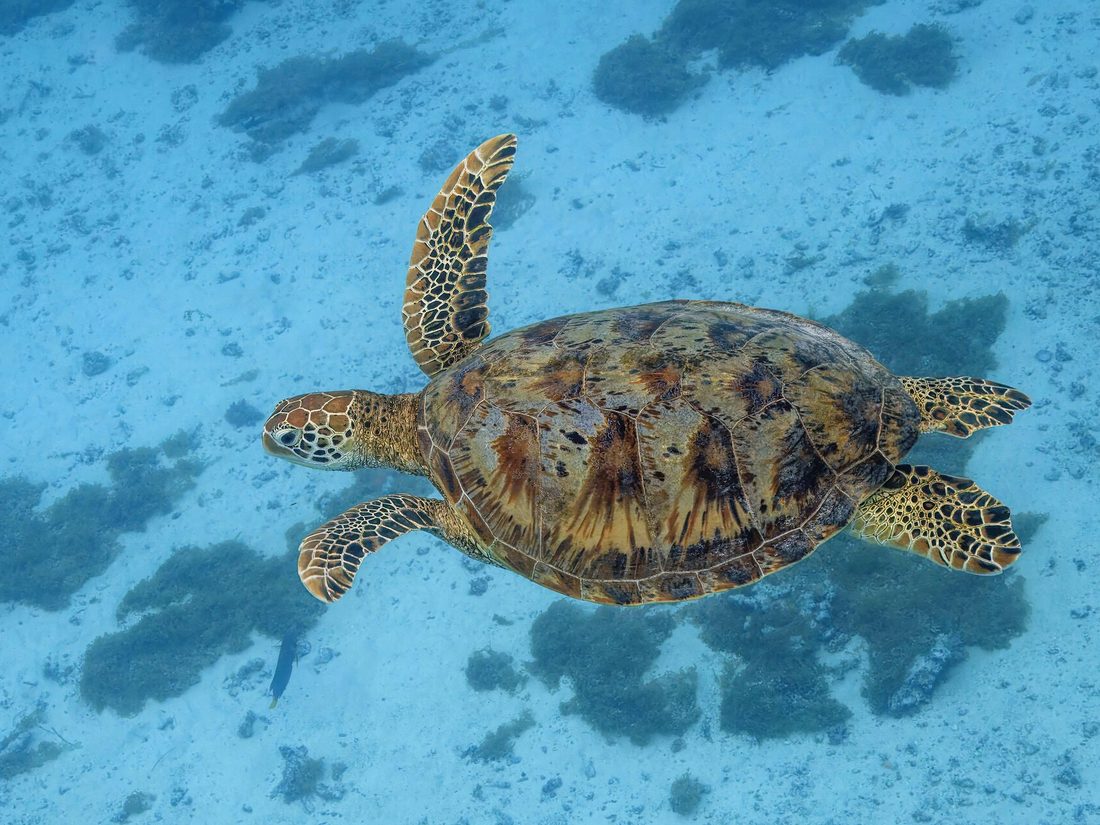
Photo: Charles J. Sharp / CC BY-SA 4.0
Green turtle
Chelonia mydasThe common one here. Adults are vegetarian, grazing the seagrass beds, which is why you find them in shallow water over sand rather than out on the reef. Rounded, blunt beak and a smooth shell. Endangered globally.
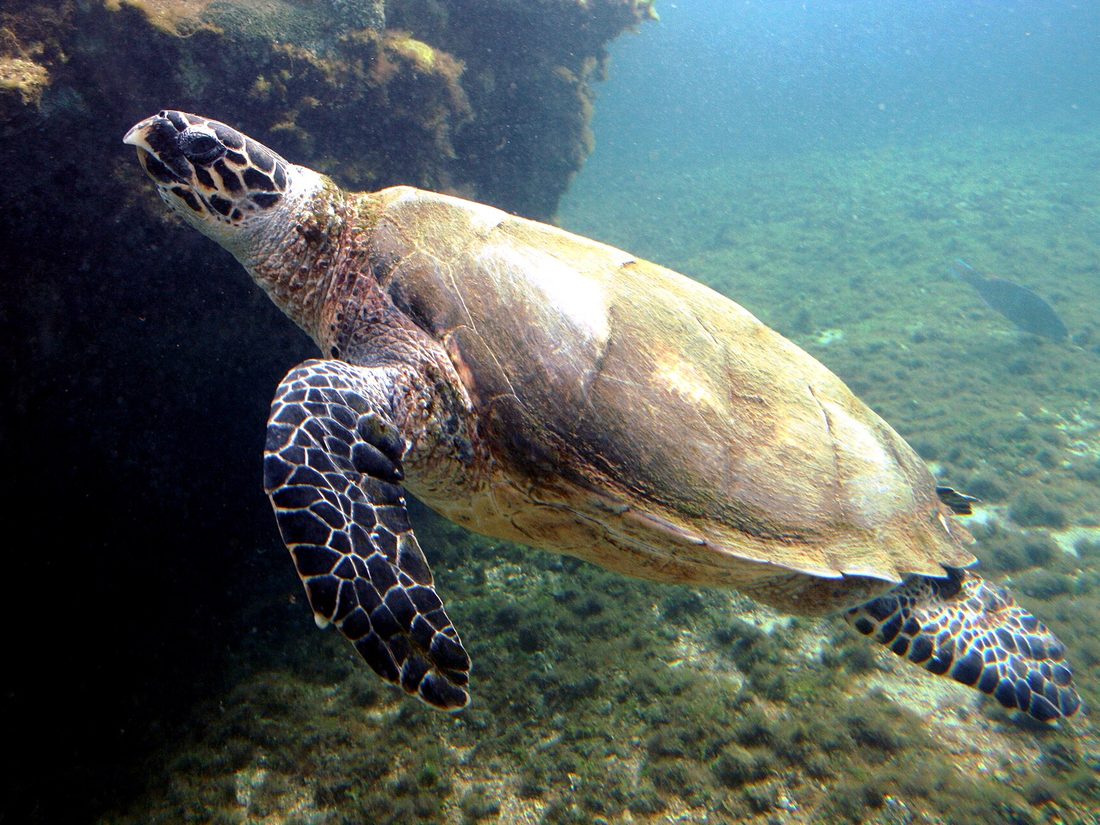
Photo: Thierry Caro / CC BY-SA 3.0
Hawksbill turtle
Eretmochelys imbricataNarrower, pointed, bird-like beak for picking sponges out of coral crevices, and overlapping shell scutes with a serrated rear edge. Critically endangered — historically hunted for tortoiseshell.
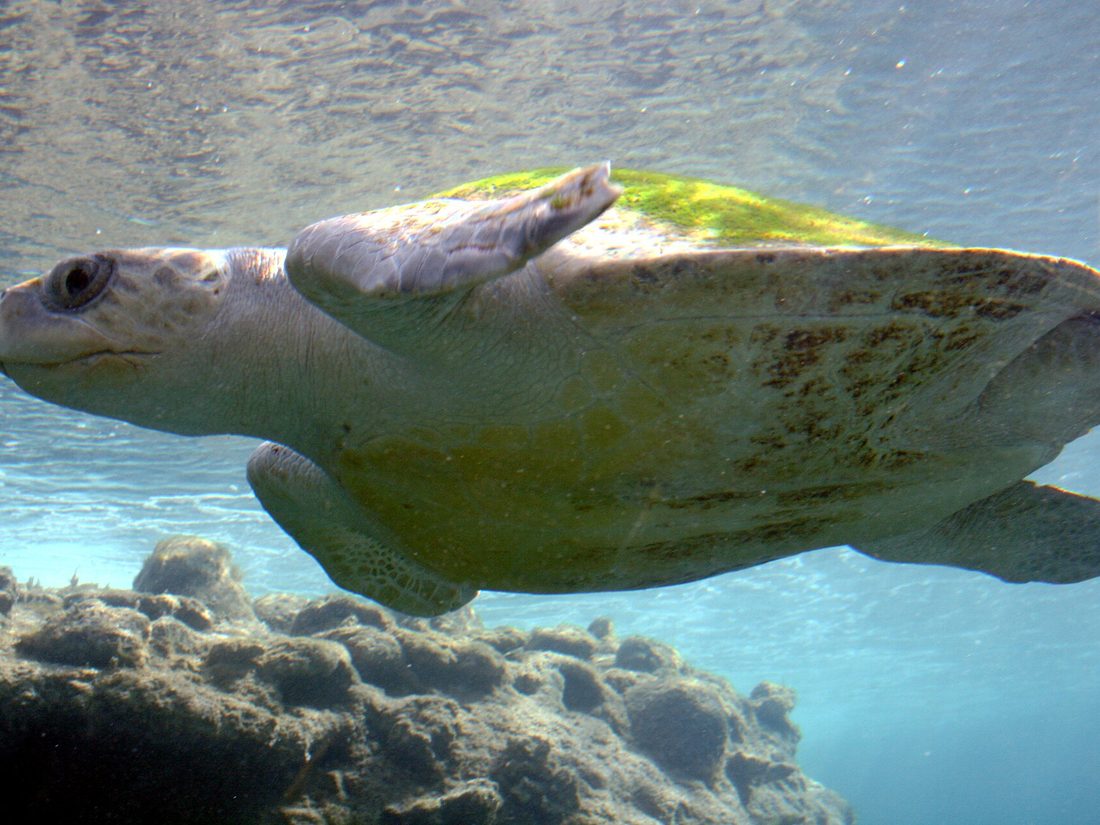
Photo: Thierry Caro / CC BY-SA 3.0
Olive ridley
Lepidochelys olivaceaSmaller and olive-grey, seen less often in the bay but nesting on south coast beaches. The species famous elsewhere for mass synchronised nesting arrivals.
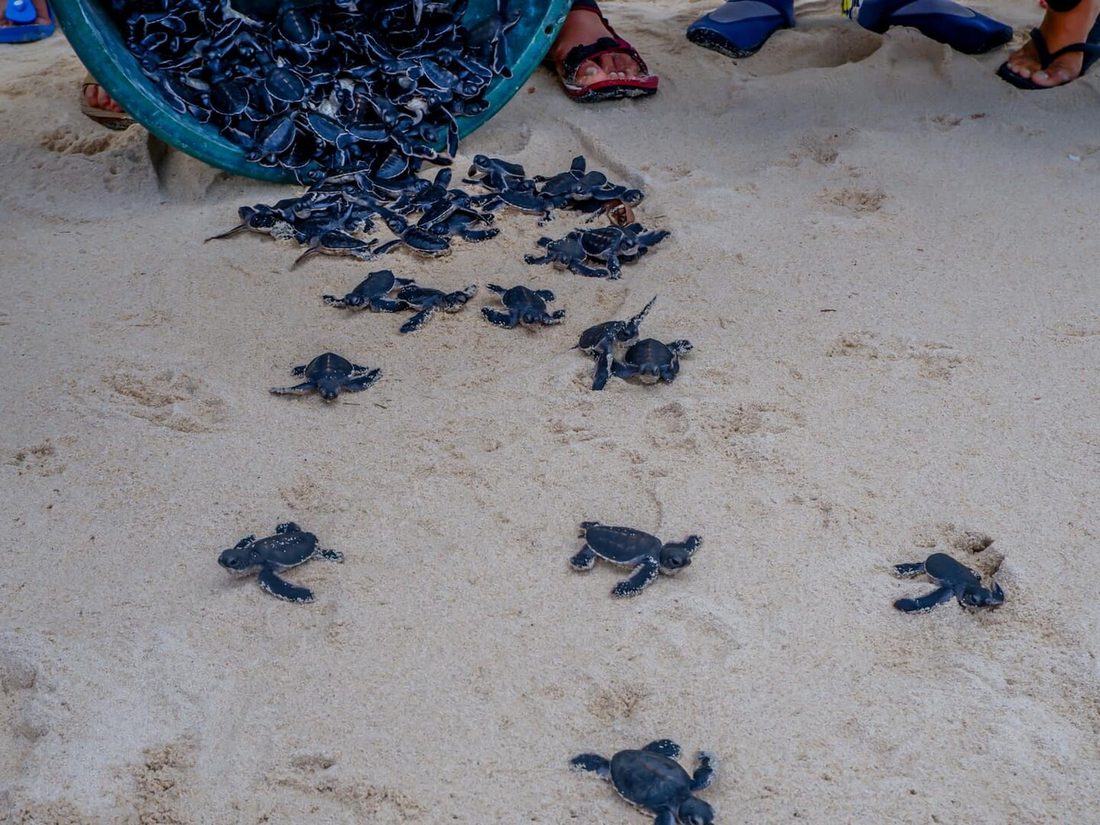
Hatchery release. Photo: Wikimedia Commons / Public domain
Beaches and hatcheries
Females come ashore at night on quiet sand, mostly between roughly April and September. Several islands including Gili Nanggu run small hatcheries, protecting clutches from dogs, poaching and tidal flooding before release.
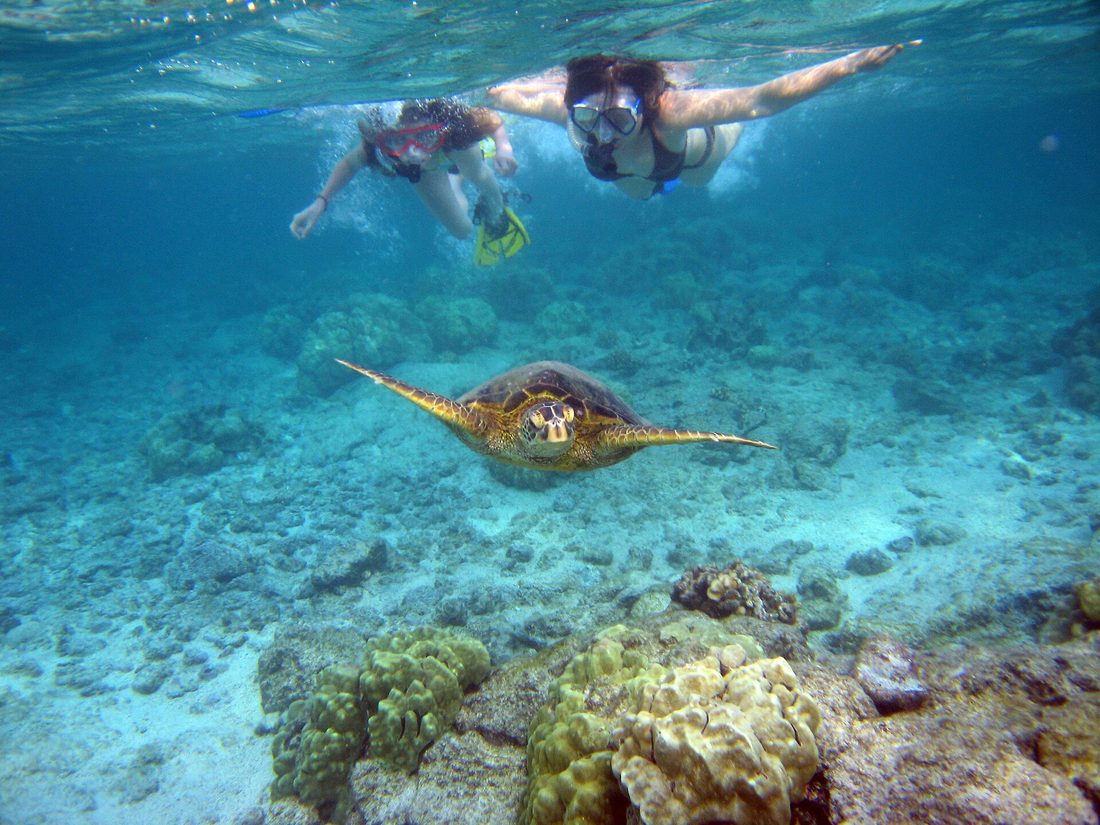
Photo: Vlad & Marina Butsky / CC BY 2.0
If you meet one
Stay still and let it surface. Never chase, touch, ride or block a turtle from reaching air — they drown. Keep the kayak at least a few metres off and it will usually carry on grazing quite happily beneath you.
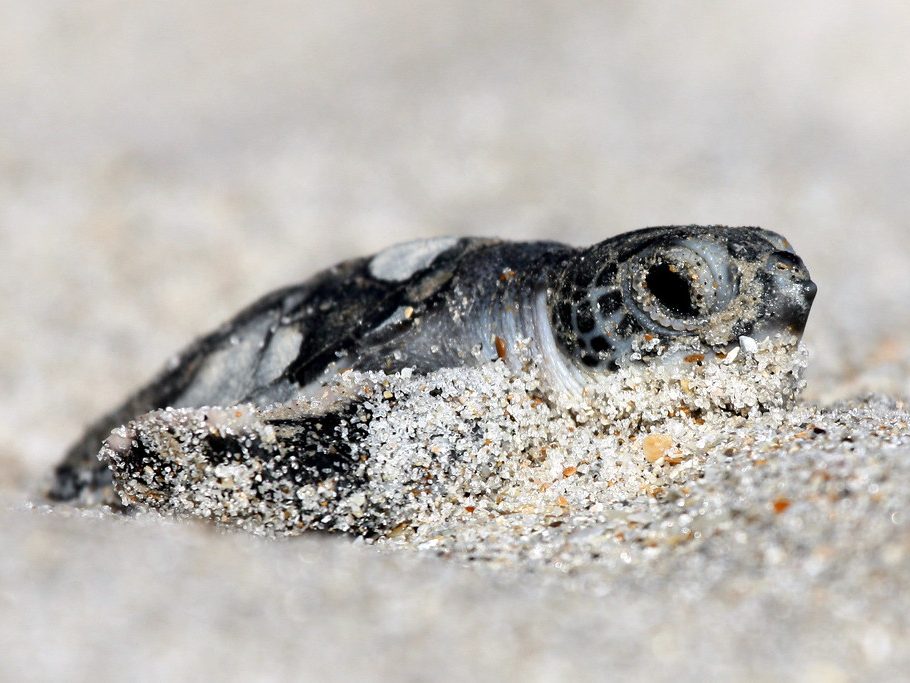
Green turtle hatchling. Public domain
Lights off
If you are on a nesting beach after dark, no white torches and no flash. Hatchlings navigate by the brightest horizon, and a phone screen will send an entire clutch inland to die.
The ones you will share a room with
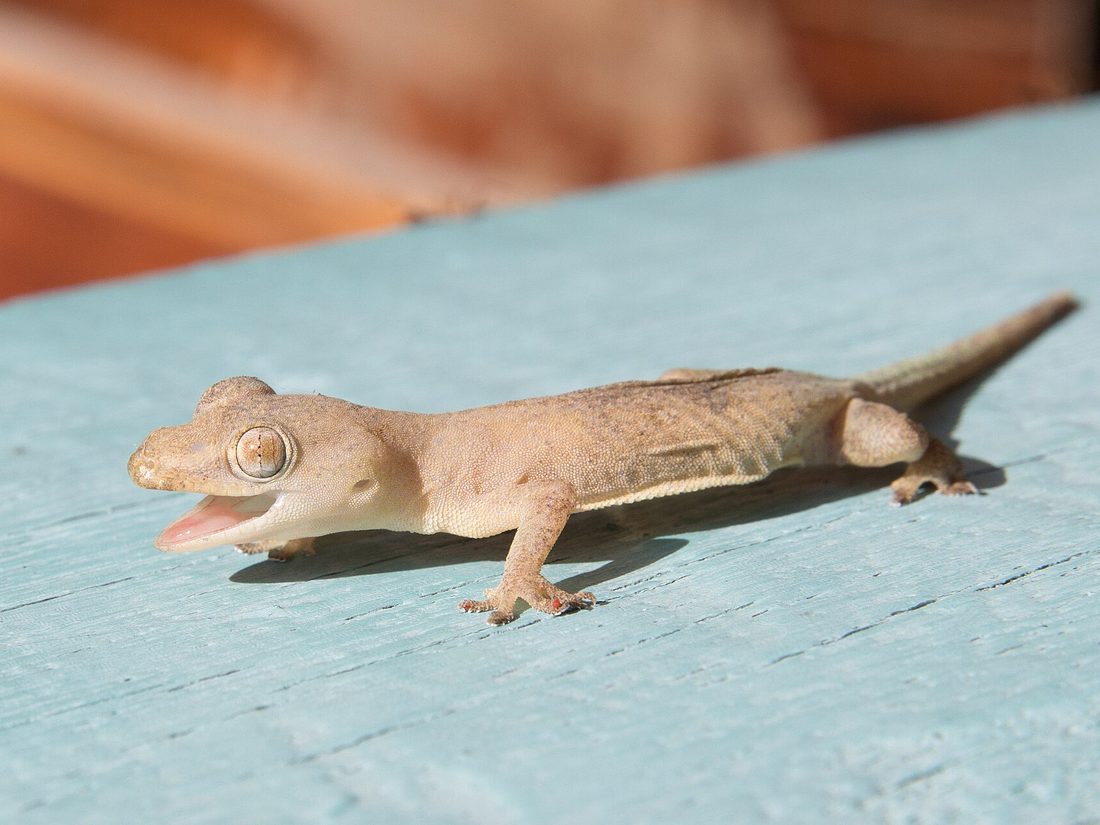
Photo: Basile Morin / CC BY 4.0
Common house gecko
Hemidactylus frenatus — cicak
Small, pale, translucent, and stationed by every outdoor light eating the insects it attracts. Entirely harmless, and doing you a favour. The chirping chik-chik-chik after dark is this.
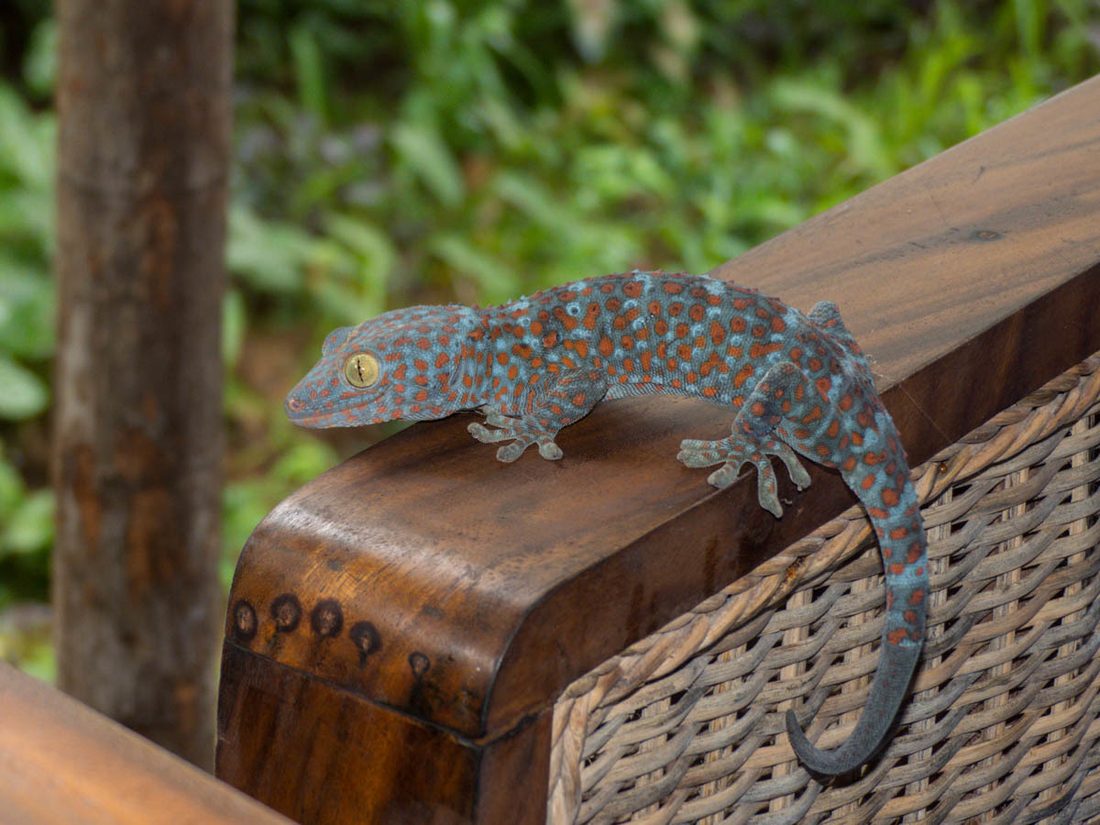
Photo: Gerard Chartier / CC BY 4.0
Tokay gecko
Gekko gecko — tokek
Thirty centimetres of blue-grey lizard with orange spots and an astonishingly loud, deliberate TO-KAY! call from the roof beams. Startling the first time. It will not bother you, but it will bite hard if you grab it, so do not.
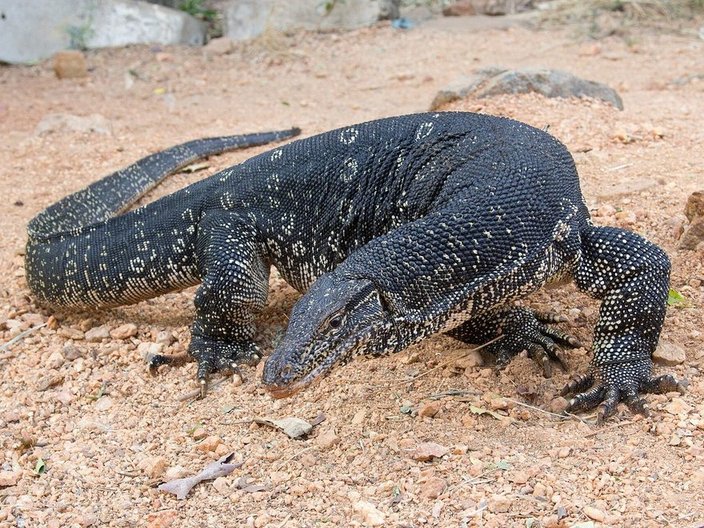
Photo: Carlos Delgado / CC BY-SA 4.0
Water monitor
Varanus salvator — biawak
Up to two metres, forked tongue, powerful swimmer. Patrols mangrove edges and beaches scavenging crabs, carrion and turtle eggs. Shy — it will leave before you get close. Give it room and do not corner it.
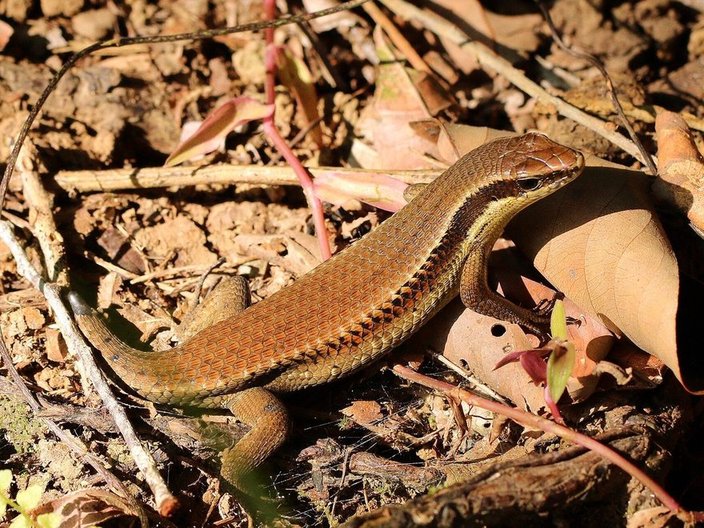
Photo: Charles J. Sharp / CC BY-SA 4.0
Sun skink
Eutropis multifasciata
Glossy bronze, striped, rustling through leaf litter at the back of every beach. The commonest lizard on the island and the one you will hear more than see.
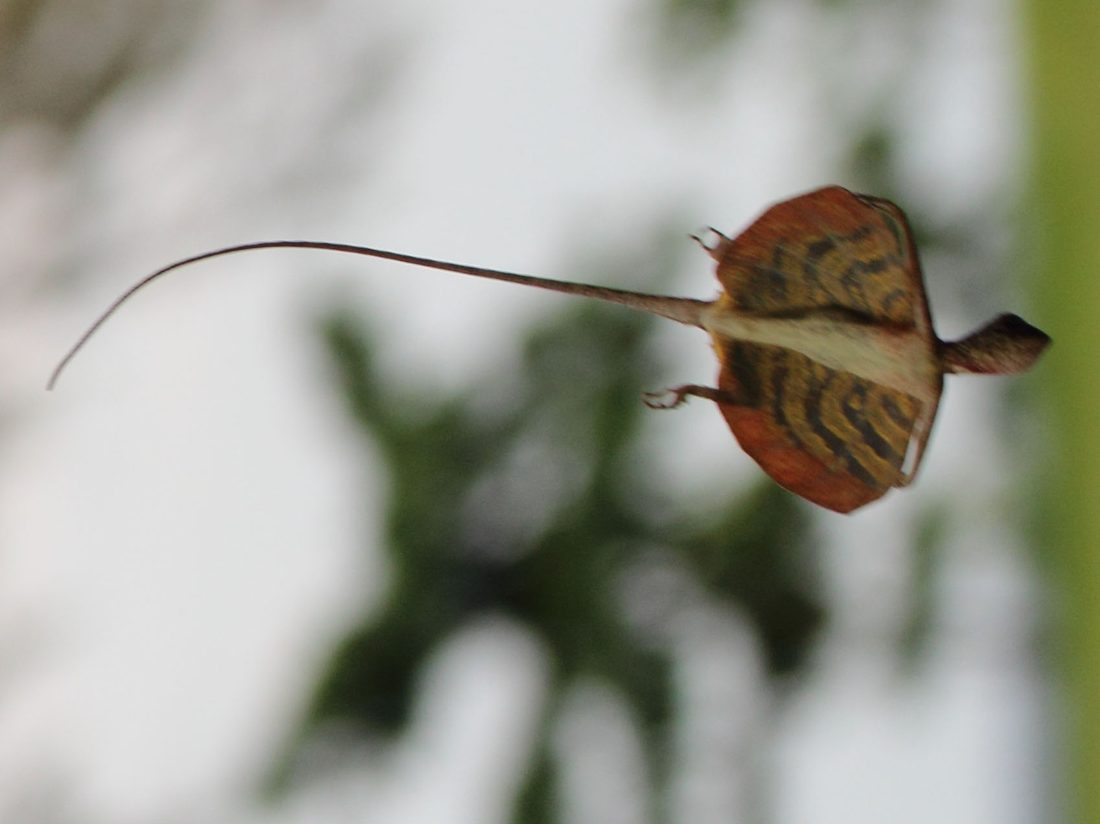
Photo: Psumuseum / CC BY-SA 3.0
Flying dragon
Draco spp.
A small tree lizard with extendable rib-supported wings, gliding between trunks in wooded areas. Easy to miss until one crosses a gap in front of you and you doubt what you saw.
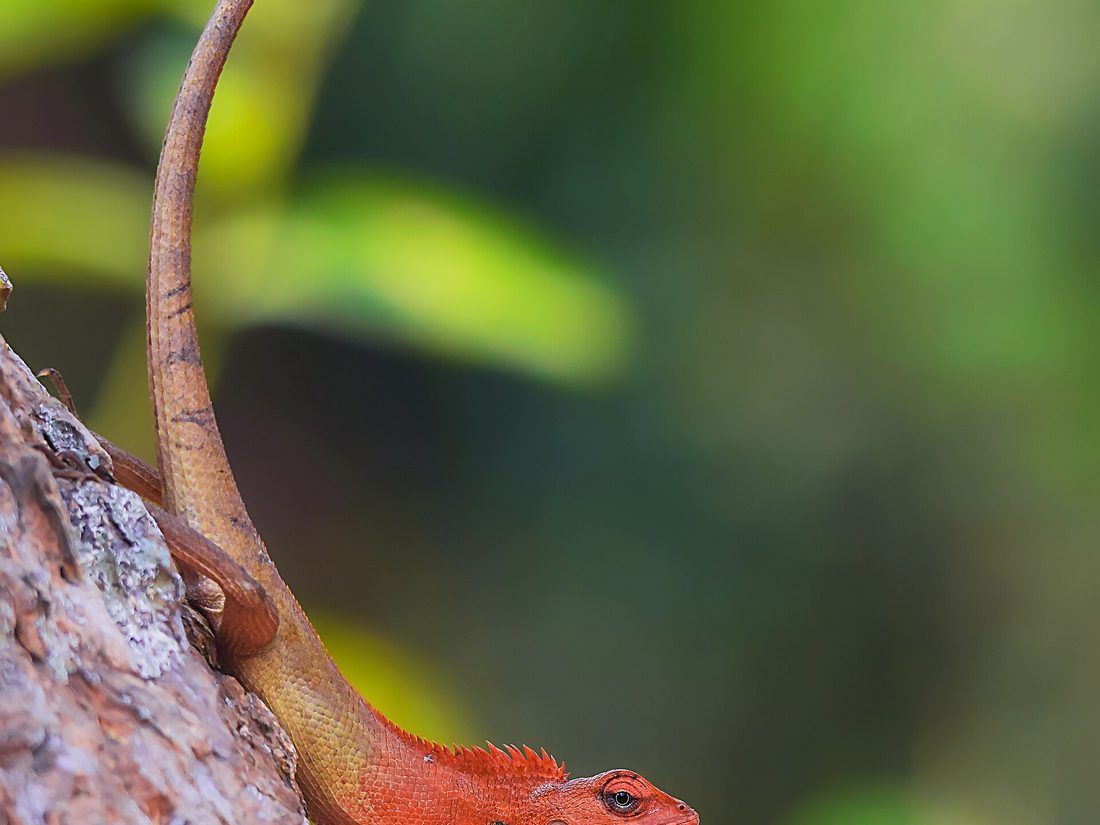
Photo: Sifat Sharker / CC BY-SA 4.0
Garden fence lizard
Calotes versicolor
Crested, long-tailed and doing press-ups on a wall. Breeding males flush bright red-orange about the head, which is where the alternative name “bloodsucker” comes from — entirely undeserved.
The ones worth knowing
Snake encounters here are uncommon and almost always brief. Nearly every bite anywhere in the world happens because somebody tried to catch, kill or move the animal. Do not, and you will be fine.
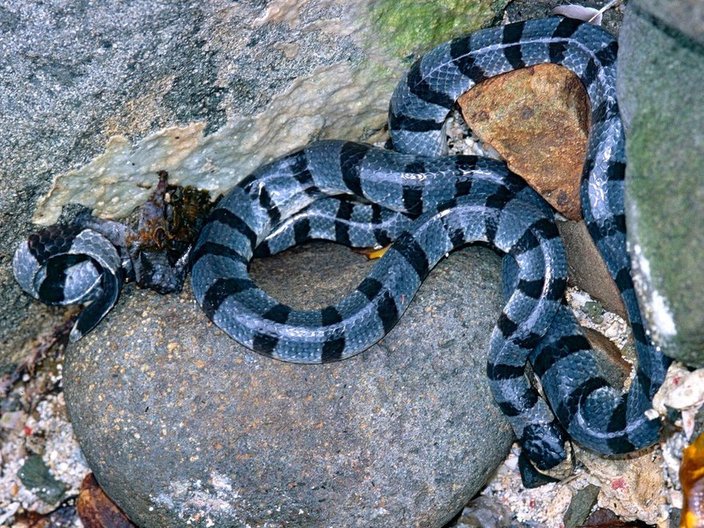
Photo: Bernard DUPONT / CC BY-SA 2.0
Banded sea krait
Laticauda colubrinaBlack-and-silver banded, paddle-tailed, hunting eels on the reef and coming ashore to rest and digest. Highly venomous but famously placid and reluctant to bite — snorkellers watch them at close range every day. Simply do not handle it.
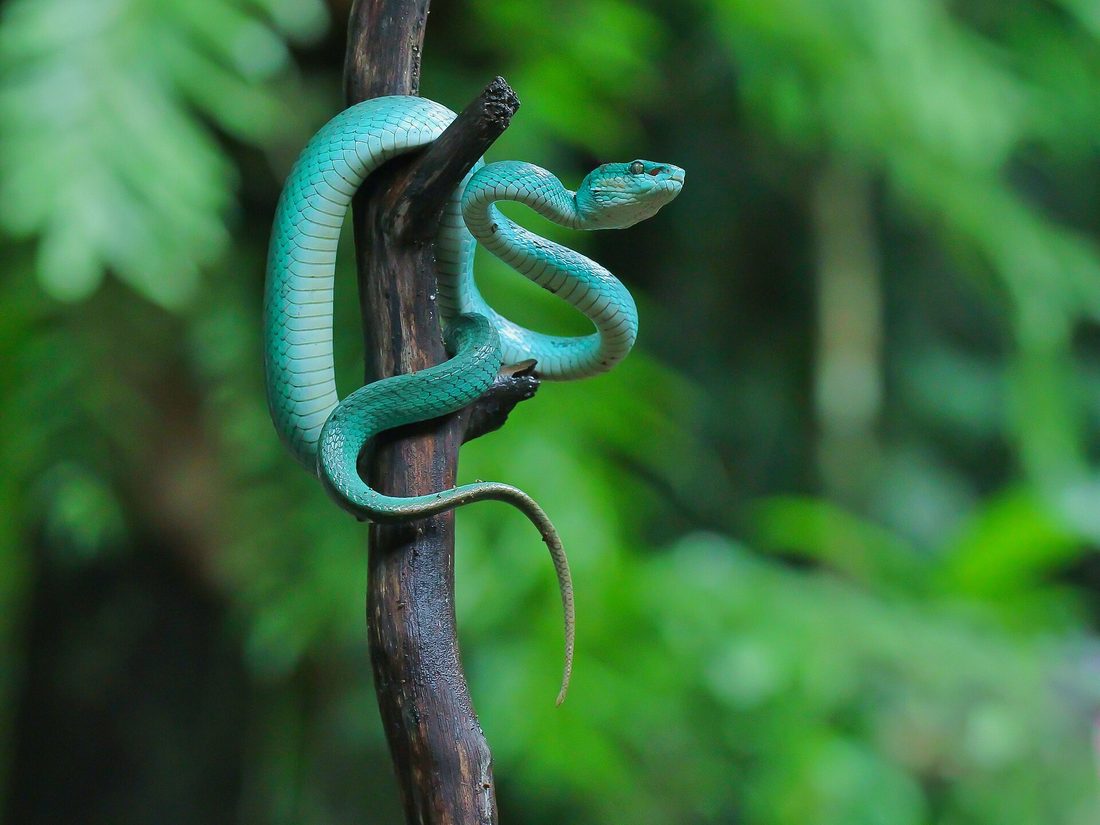
Photo: Imam Subayil / CC BY-SA 4.0
Island pit viper
Trimeresurus insularisBright green, triangular-headed, and nocturnal — draped in low vegetation near water. This is the one to have a torch for if you are walking a garden path at night. Bites are painful and need medical care, but it is not aggressive.
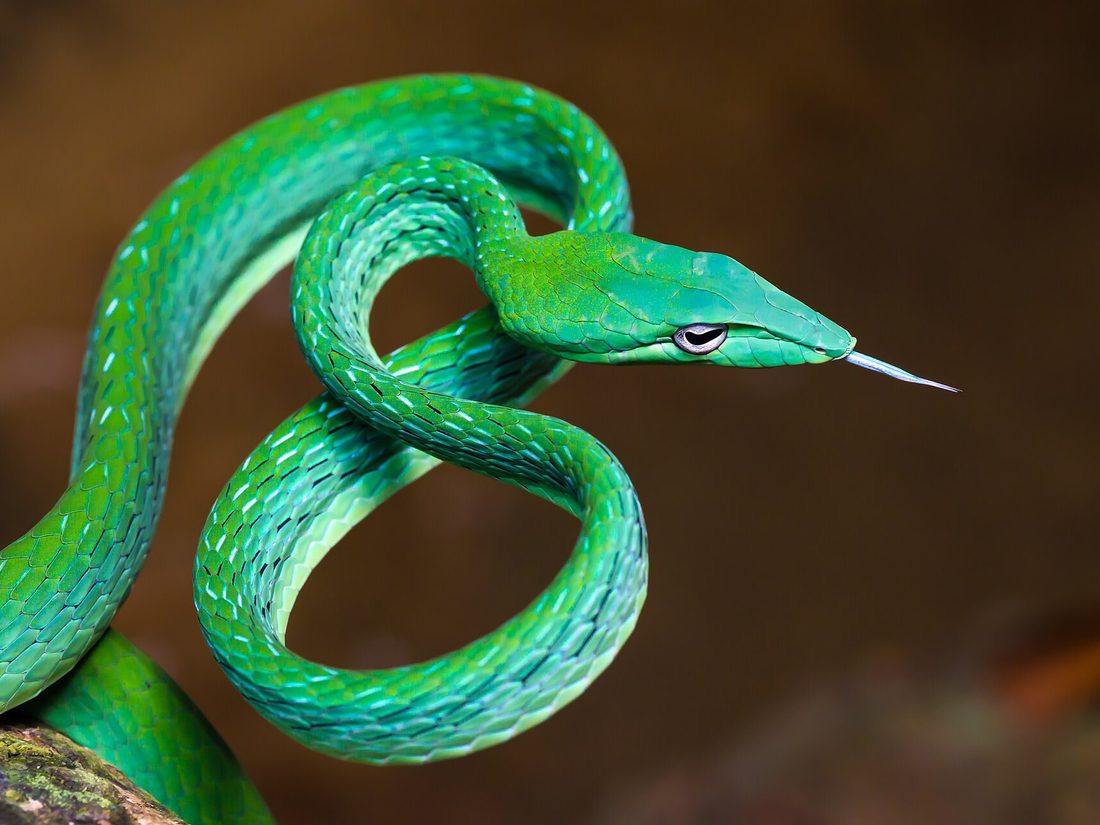
Photo: Rushenb / CC BY-SA 4.0
Oriental whip snake
Ahaetulla prasinaExtremely slender, vivid green, with a pointed snout and horizontal keyhole pupils. Hangs motionless in bushes hunting lizards. Often mistaken for a viper; it is rear-fanged and of no real consequence to people.
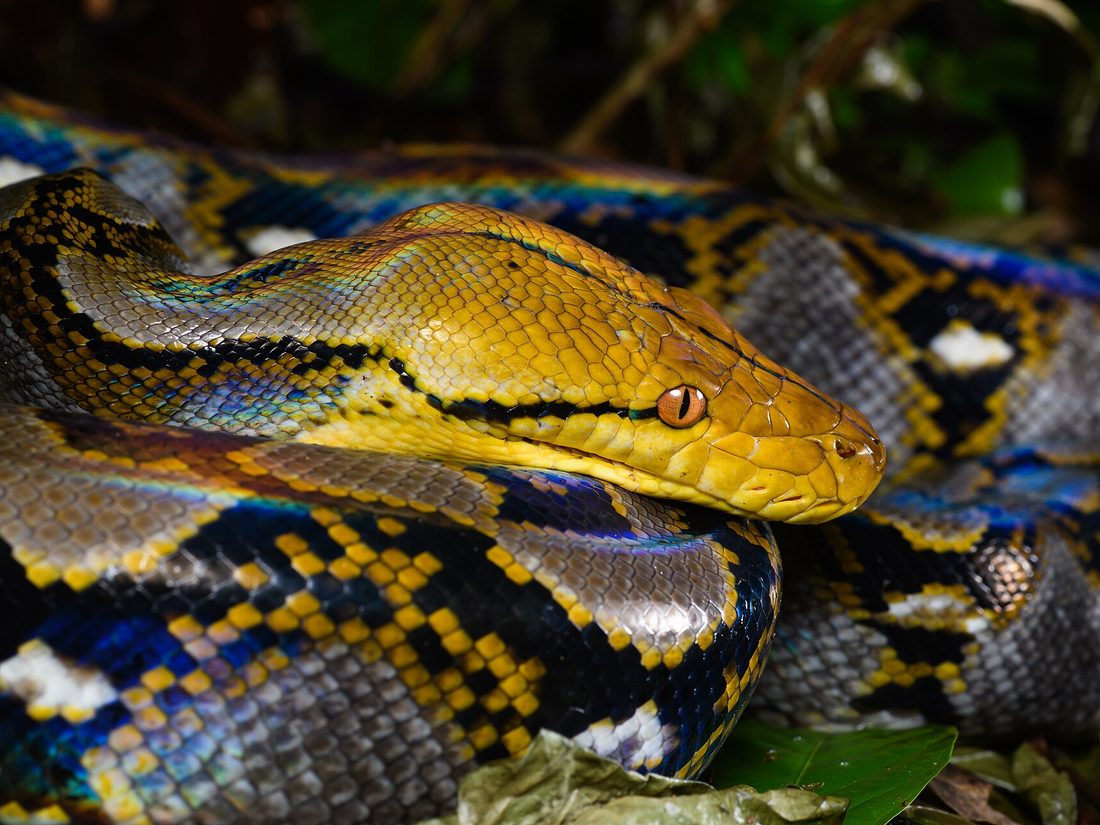
Photo: Rushenb / CC BY-SA 2.0
Reticulated python
Malayopython reticulatusNon-venomous, and the longest snake in the world — though what you will realistically meet is a two-metre juvenile near a village chicken coop. Sightings are rare and a large one is a genuinely impressive animal.
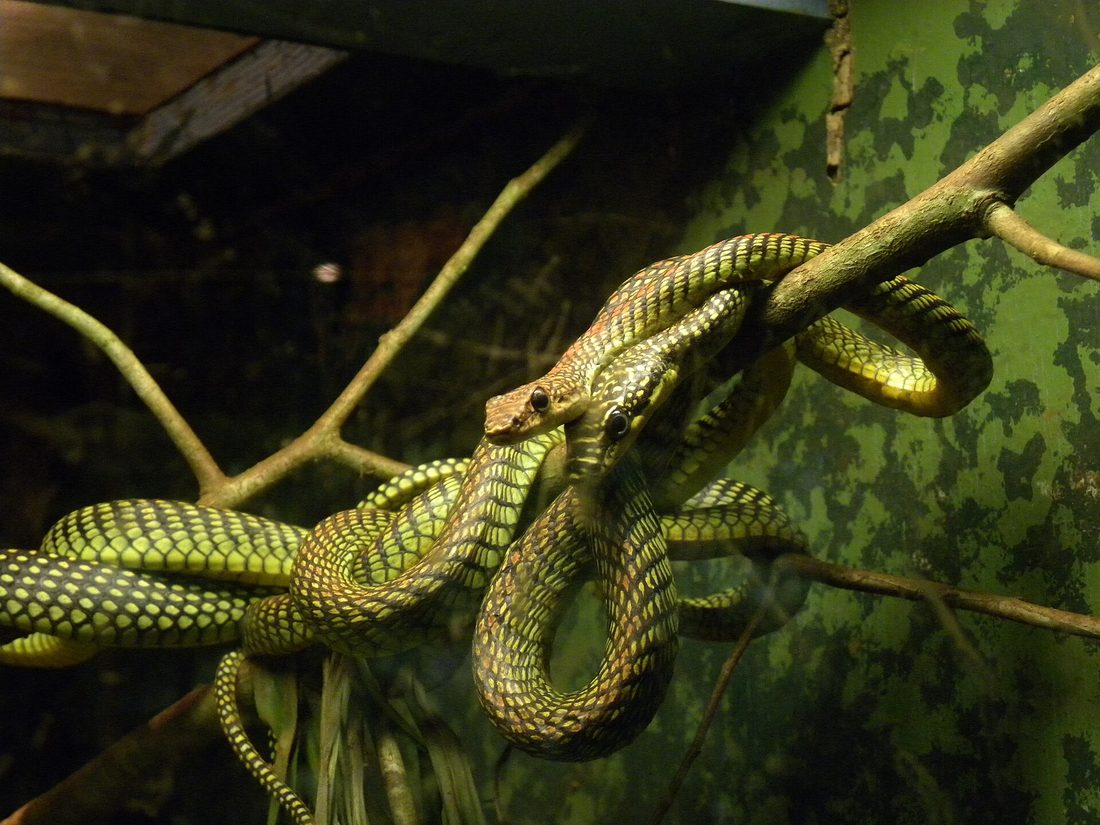
Photo: Alan Couch / CC BY 2.0
Paradise flying snake
Chrysopelea paradisiBlack with green and red markings, and capable of flattening its body to glide between trees. More curiosity than concern.
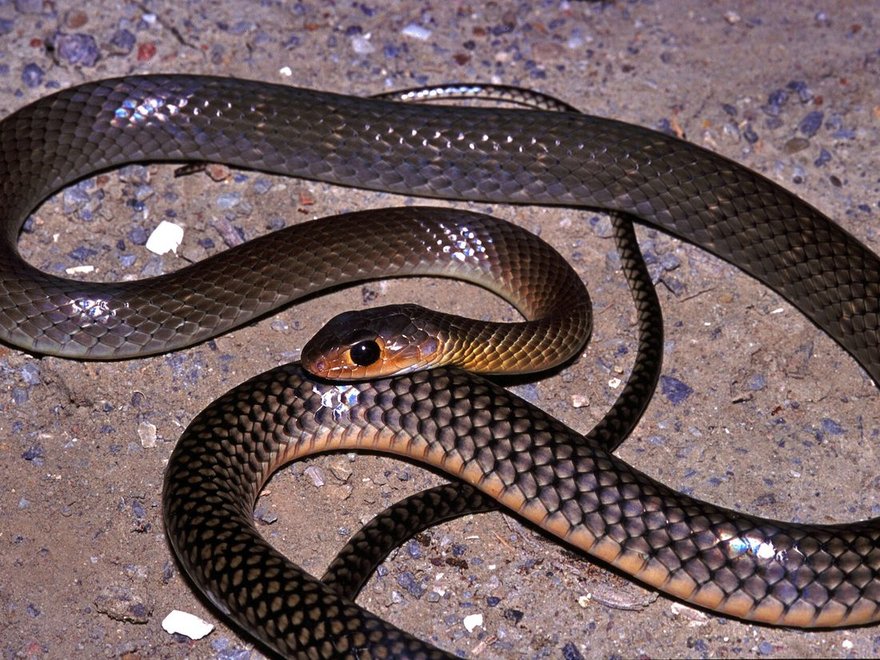
Photo: Bernard DUPONT / CC BY-SA 2.0
Rat snakes
Ptyas spp.Long, fast, brown and the ones most often seen crossing a road or a rice bund in daylight. Beneficial around villages for obvious reasons.
Sensible precautions
Carry a torch after dark and watch where you put your feet and hands, especially near water and woodpiles. Shake out shoes left outside overnight. Never try to catch, kill or photograph a snake at close range — back away and it will leave.
If someone is bitten: keep them still and calm, immobilise the limb, do not cut, suck or apply a tourniquet, and get to a hospital. Mataram has the nearest major facilities and antivenom. Photograph the snake only if it is safe and it has not moved.
Questions we get asked
Are sea snakes a problem when snorkelling?
No. Banded sea kraits are common on these reefs and essentially never bite swimmers. They are focused on eels in crevices and have no interest in you. Watch, keep your hands to yourself, and enjoy it — they are beautiful animals.
Are there saltwater crocodiles?
No. Lombok has no resident crocodile population. Occasional stray individuals have been reported in eastern Indonesia, but this is not crocodile country and it is not something to plan around.
Will a gecko in my room bite me?
The little pale ones, no — they will not come near you and they eat mosquitoes. The large tokay will bite if handled, and does not let go quickly, so admire that one from across the room.
What is the best chance of seeing a turtle?
Calm water, good light, and the shallow seagrass between the islands. Late morning on the day trip is the usual moment. It is never guaranteed, but over a full day on the water most groups see at least one.
Can I visit a turtle hatchery?
Yes — there is a small one on Gili Nanggu that we often stop at. Choose places that keep hatchlings only briefly and release at dusk or dawn; long-term tank-rearing for photos is not good practice.
More field guides
Fish →
What is under the kayak, from clownfish to the hammerheads of Blongas.
Local Animals →
Macaques, fruit bats, sea eagles and the endemic Rinjani scops owl.
Local Flora →
Frangipani, orchids, seagrass and the beach plants that hold the sand together.
Trees →
Coconut, banyan, mangrove and the cashew and clove country inland.
Places to See →
The Secret Gilis, the south coast, the waterfalls and the Sasak villages.
Our Trips →
Discover Sea Kayaking through to six-day expeditions along the south coast.
Best odds of a turtle
The full-day Secret Gilis loop crosses the seagrass beds twice. Bring a mask.